
When Hollywood first announced that a massive biopic about Michael Jackson was officially happening, reactions immediately exploded across the internet because there are very few artists in modern history whose life feels cinematic enough to carry a production of this scale, and there are even fewer celebrities whose public image remains as complicated, emotional, controversial and culturally powerful decades after reaching superstardom. The film Michael quickly became one of the most talked about projects in the entertainment industry long before audiences ever saw a single frame because the movie was attempting something almost impossible, which was telling the story of a man who transformed popular music forever while also existing at the center of endless debate surrounding fame, family pressure, isolation, genius, trauma and allegations that continue to divide public opinion to this day.
The scale of the production immediately signaled that this would not be a standard musical biopic created simply to recycle nostalgia for older audiences because the people behind the project clearly wanted Michael to feel like a cinematic event in the same way that films such as Bohemian Rhapsody or Elvis became global pop culture conversations. What separated Michael from almost every previous music biopic, however, was the enormous pressure surrounding the story itself because unlike many legendary artists whose narratives are largely celebrated without major public division, Michael Jackson’s legacy remains emotionally charged and deeply controversial. That reality shaped almost every discussion surrounding the movie from the moment development began.
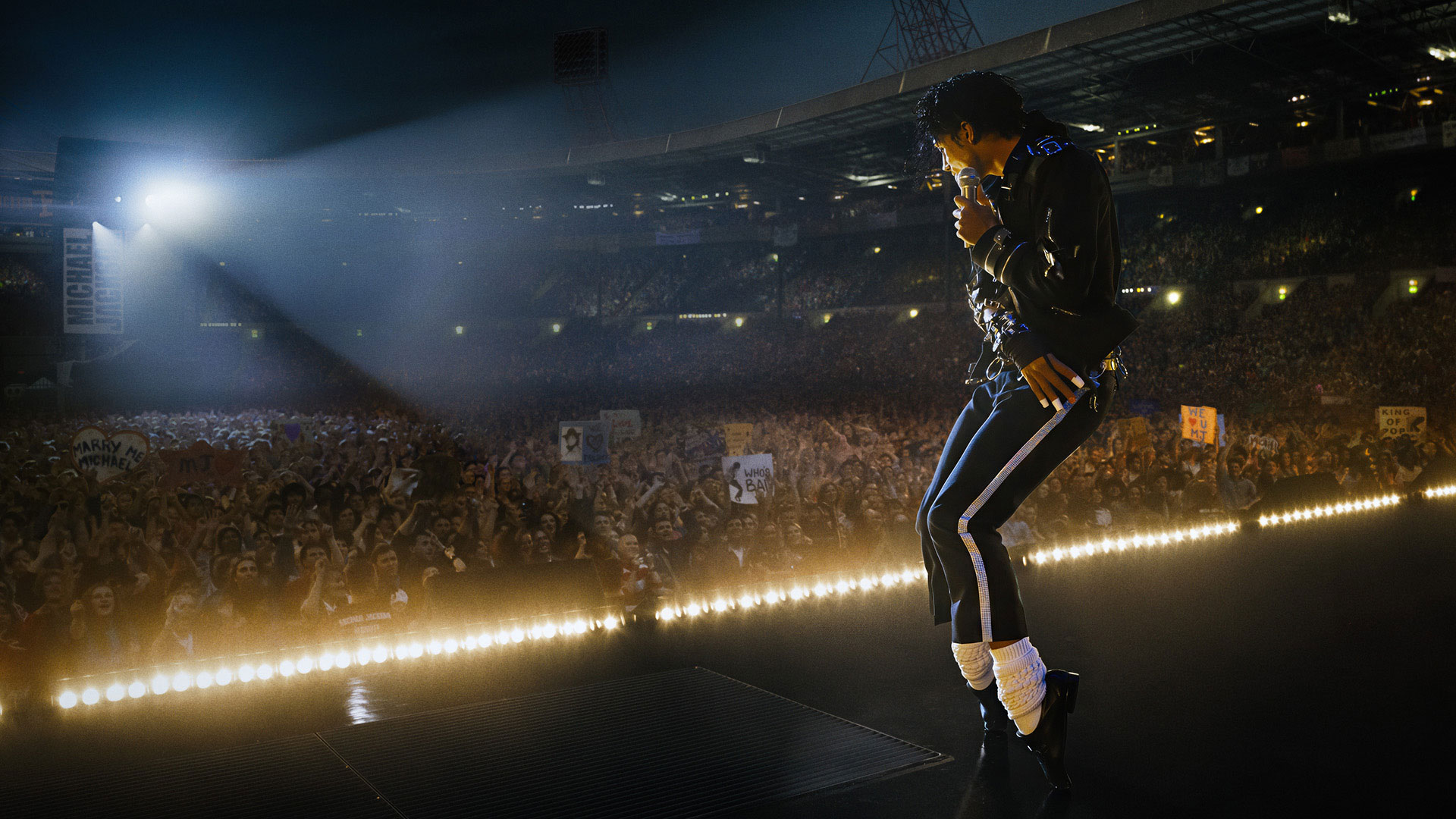
The film was directed by Antoine Fuqua, a filmmaker known for bringing intensity and emotional weight to large scale productions throughout his career. Fuqua built his reputation directing films like Training Day, which won Denzel Washington an Academy Award, along with projects such as The Equalizer and Emancipation. His involvement immediately suggested that the movie would not simply function as a collection of concert recreations stitched together through surface level storytelling because Fuqua’s style has always leaned toward emotional conflict, tension and psychological struggle.
The screenplay was written by John Logan, whose résumé includes acclaimed films such as Gladiator, The Aviator and Skyfall. The combination of Fuqua and Logan immediately created expectations that Michael would attempt to balance spectacle with emotional storytelling instead of functioning purely as fan service. Producer Graham King also became a major reason for excitement surrounding the project because King previously produced Bohemian Rhapsody, which became one of the highest grossing music biopics ever made despite mixed critical reviews. Many industry observers believed that Michael was clearly being positioned as another giant box office phenomenon built around nostalgia, iconic music and awards season attention.
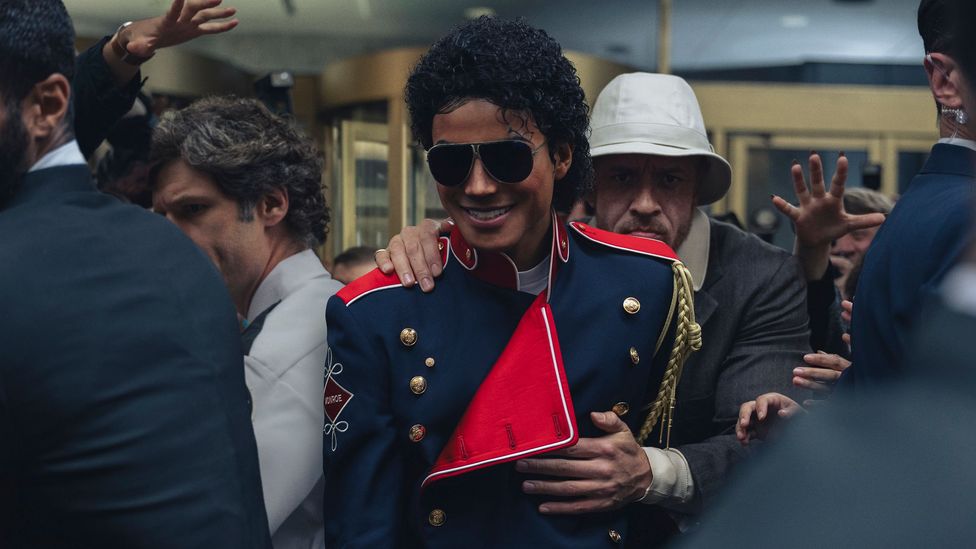
One of the biggest talking points surrounding the movie was the casting of Jaafar Jackson as Michael Jackson himself. Jaafar is the son of Jermaine Jackson, making him Michael Jackson’s real life nephew, and from the moment the first images from the set appeared online audiences became fascinated by how physically similar he looked to his uncle during certain stages of Michael’s career. Social media exploded with side by side comparisons showing Jaafar recreating famous poses, costumes and dance movements associated with Michael Jackson’s rise during the late 1970s and 1980s.
For many fans, the family connection added an emotional layer to the performance because there was a feeling that someone who grew up inside the Jackson family orbit might understand Michael’s energy, voice and body language in a more natural way than a completely unrelated actor. Others, however, questioned whether the involvement of a family member could make the film too protective of Jackson’s image, especially considering the controversies surrounding his personal life. That tension remained attached to the project throughout production and continued after release.
According to early reactions and reviews, Jaafar Jackson’s performance became one of the most widely praised aspects of the film even among critics who disliked other elements of the production. Many viewers pointed to the physical transformation, vocal similarities and recreation of Michael’s stage presence as surprisingly convincing. Several reviews specifically highlighted the challenge of portraying someone whose movements are so globally recognizable because Michael Jackson’s dancing style has become part of pop culture history itself. Audiences know exactly how he moved, how he tilted his head, how he spun during performances and how he carried himself on stage, which meant even tiny inaccuracies would immediately stand out.
The younger version of Michael was played by Juliano Krue Valdi, who portrayed Michael during the Jackson 5 years. Early reactions often described those childhood scenes as some of the strongest moments in the movie because they explored Michael’s difficult relationship with his father and the intense pressure placed on him from a very young age. Several viewers noted that the film spends considerable time showing how Michael’s childhood fame shaped his emotional development and contributed to the loneliness that followed him throughout adulthood.
The supporting cast was filled with recognizable names playing important figures connected to Michael Jackson’s career and family history. Colman Domingo portrayed Joe Jackson, the strict and controversial patriarch of the Jackson family whose parenting methods have been debated for decades. Nia Long played Katherine Jackson, Michael’s mother, while Miles Teller portrayed longtime entertainment lawyer and adviser John Branca. Kat Graham appeared as Diana Ross, while Larenz Tate played Berry Gordy.
Many fans were especially curious about how the movie would portray Joe Jackson because the relationship between Michael and his father has long been viewed as one of the defining emotional elements of Michael’s life story. Michael himself repeatedly discussed the emotional and physical abuse he experienced during childhood rehearsals with the Jackson 5, and those experiences became central to the public understanding of his adulthood, his insecurities and his complicated relationship with fame. Reviews suggest that Colman Domingo brought intensity to the role while still attempting to show Joe Jackson as more than a one dimensional villain. Some viewers praised that complexity while others felt the script did not go deep enough into the psychological impact Joe had on his children.
One of the largest discussions surrounding Michael involved what the film chose not to show. Long before release, reports began circulating that the production had undergone extensive rewrites and reshoots connected to legal concerns regarding the allegations of child sexual abuse that surrounded Michael Jackson for years. According to multiple reports, the filmmakers were legally restricted from depicting certain allegations tied to accuser Jordan Chandler because of agreements connected to the Jackson estate.
That revelation immediately intensified criticism from people who believed the movie would ultimately function as an estate approved portrait designed to protect Michael Jackson’s image instead of fully examining the darker chapters of his life. Critics argued that creating a major biopic while avoiding the allegations entirely would inevitably produce an incomplete version of the story because the accusations became such a defining part of Michael Jackson’s public identity during the later years of his career.
At the same time, many fans defended the movie by arguing that the allegations themselves remain disputed and that Michael Jackson was acquitted during his 2005 criminal trial. Others insisted the film should focus primarily on his artistry, his childhood trauma and his influence on music rather than functioning as a courtroom drama. The existence of those radically different perspectives guaranteed that Michael would become controversial regardless of how the filmmakers approached the subject.
Another major source of fascination surrounding the movie involved the sheer scale of the production itself. Reports estimated the budget somewhere between $155 million and $200 million, placing Michael among the most expensive music biopics ever produced. The filmmakers recreated famous concert performances, award show appearances and music video sequences associated with albums like Thriller, Bad and Off the Wall.
The trailers immediately demonstrated how heavily the movie leaned into visual recreation because audiences were shown glimpses of the moonwalk, the “Billie Jean” performance aesthetic, references to the “Thriller” video and multiple iconic outfits associated with Michael Jackson’s most famous eras. The first teaser trailer generated enormous attention online and reportedly broke records for music biopic trailer launches with more than 116 million views within 24 hours.
That level of attention reflected how Michael Jackson remains one of the most commercially powerful entertainers in modern history despite the controversies surrounding his legacy. Even younger generations who were not alive during his peak years still recognize songs like Billie Jean, Thriller and Beat It almost instantly because his music continues to exist everywhere from TikTok trends to sports arenas to streaming playlists. The marketing for Michael leaned heavily into that cross generational familiarity.
Some online discussions even suggested the possibility of splitting the story into multiple films because Michael Jackson’s life and career were simply too massive to fit comfortably into a single movie. Rumors circulated that additional footage existed covering later stages of his career including the controversial years that followed the Bad era. While those discussions remained largely speculative during production, the sequel was confirmed after the film’s release.
The critical response to the movie became deeply divided. Some critics praised the performances, music recreations and production value while criticizing the screenplay for avoiding the most controversial aspects of Jackson’s story. Others argued that the movie ultimately feels too safe and emotionally distant despite the extraordinary subject matter. Several reviews compared the film to other estate approved music biopics that prioritize preserving a legend’s image over fully interrogating the complexity of their lives.
Audience reactions, however, were often significantly more positive than many professional reviews. Fans praised the musical sequences, emotional nostalgia and Jaafar Jackson’s performance. Online communities dedicated to Michael Jackson frequently described the movie as emotional and visually impressive even when acknowledging flaws in pacing or storytelling. Some viewers specifically appreciated that the film avoided sensationalism and focused more heavily on Michael’s artistry and emotional isolation.
One of the most fascinating aspects of the conversation surrounding Michael is how the film reopened broader debates about celebrity memory and cultural legacy in the social media era. Michael Jackson’s reputation has gone through multiple dramatic transformations since his death in 2009. For years after his death many people largely focused on celebrating his musical achievements, but the release of Leaving Neverland reignited intense scrutiny surrounding the allegations against him. The documentary significantly altered public conversations about Michael Jackson, especially among younger audiences who did not grow up during his original rise to fame.
Because of that context, Michael arrived at a moment when public opinion surrounding Jackson remains extremely fragmented. Some people continue viewing him primarily as one of the greatest entertainers who ever lived while others see the allegations as inseparable from his legacy. The movie therefore became larger than entertainment itself because it functioned as another chapter in the ongoing battle over how Michael Jackson should be remembered culturally.
Several articles discussing the film noted how younger audiences on platforms like TikTok and Instagram have contributed to a renewed fascination with Michael Jackson’s music and image. Songs from his catalog continue gaining millions of streams while clips of his performances regularly go viral online. The release of Michael intensified that renewed interest even further, reportedly helping albums like Thriller reenter major music charts again decades after their original release.
Commercially, the movie became a major success despite mixed reviews. Reports indicated that the film earned hundreds of millions globally within weeks of release, proving once again that Michael Jackson’s name still carries enormous commercial power worldwide. Industry analysts were not entirely surprised because music biopics have become increasingly profitable during the past decade, especially when centered around artists with massive global fanbases.
There was also significant curiosity surrounding how the movie recreated famous musical moments from Michael Jackson’s career because his performances were often defined by perfectionism and technical precision. Reports from viewers repeatedly highlighted the concert sequences as some of the film’s strongest material, especially moments recreating the energy of his live performances during the Thriller and Bad eras.
The costume design, choreography and cinematography all played major roles in attempting to transport audiences back into the peak years of Michael Jackson’s superstardom. That visual recreation mattered enormously because Michael Jackson’s image itself became iconic in a way few entertainers have ever achieved. The single glove, military inspired jackets, loafers, fedora hats and sequined stage outfits remain instantly recognizable symbols even among people who are not deeply familiar with his music.
Another reason the film generated so much interest was the emotional contradiction at the center of Michael Jackson’s public identity. Throughout his life he often appeared simultaneously powerful and fragile, massively famous yet emotionally isolated, childlike yet deeply calculating about his career. Capturing those contradictions in a traditional Hollywood structure was always going to be difficult because Michael Jackson himself often felt almost impossible to fully understand publicly.
The film reportedly spends considerable time exploring Michael’s early years inside the Jackson family, including the intense rehearsals and pressure surrounding the Jackson 5’s rise under Motown. Many viewers considered those childhood scenes emotionally effective because they grounded the story in Michael’s loss of normal childhood experiences. The movie frequently presents fame itself as both a gift and a prison throughout Michael’s life.
Some critics argued that the movie occasionally becomes too focused on recreating iconic moments instead of deeply analyzing Michael Jackson as a person. This criticism has become increasingly common within the modern music biopic genre where filmmakers often prioritize recognizable scenes designed for trailers and audience applause rather than emotional complexity. Comparisons were frequently made to films like Bohemian Rhapsody, which also became hugely successful commercially despite criticism that it sanitized parts of Freddie Mercury’s life story.
Still, even many critics who disliked parts of Michael acknowledged the difficulty of adapting Michael Jackson’s life into a single mainstream film because there may never be a version of this story capable of satisfying everyone. Any attempt to focus heavily on the allegations would anger devoted fans, while avoiding them entirely would frustrate critics who view those accusations as essential historical context. The filmmakers essentially walked into one of the most impossible balancing acts in modern entertainment.
The involvement of the Jackson estate remained another major discussion point throughout the movie’s release. Estate approved biopics often face criticism because audiences worry that difficult truths will be softened or removed entirely. Defenders of the film argued that the estate’s involvement allowed the production to access music rights, costumes, archives and detailed recreations that would otherwise have been impossible. Critics countered that those advantages came at the cost of narrative honesty.
One thing that became undeniably clear after the release of Michael is that Michael Jackson’s cultural presence remains enormous even years after his death. Very few artists continue generating this level of emotional reaction, commercial success and controversy simultaneously decades into their legacy. The movie itself almost became secondary to the larger cultural conversation it triggered because people were ultimately debating memory, fame, celebrity worship and public morality as much as they were debating cinema.
There is also the simple reality that Michael Jackson’s life naturally contains many of the elements audiences associate with epic Hollywood storytelling. He rose from poverty in Gary, Indiana to become arguably the most famous entertainer on Earth. He experienced unimaginable fame before adulthood, transformed the music industry repeatedly and lived through intense scrutiny unlike almost any celebrity in modern history. Those elements create a story structure that already feels larger than fiction.
The soundtrack and musical elements of the movie were always expected to become one of its strongest commercial weapons because Michael Jackson’s catalog remains one of the most successful in recording history. Reports following release suggested that streams and chart positions for his music surged again after audiences saw the movie, continuing the pattern previously seen with films like Bohemian Rhapsody and Elvis.
Whether audiences ultimately view Michael as a great biopic, a flawed spectacle or an overly sanitized portrait probably depends heavily on what they expected from the project before entering the theater. Fans searching for an emotional recreation of Michael Jackson’s rise to global superstardom often found plenty to enjoy in the music, performances and nostalgic recreations. Viewers hoping for a brutally comprehensive examination of his entire life frequently left disappointed by what the movie chose to avoid or simplify.
What cannot really be denied is that the movie succeeded in reigniting worldwide conversation surrounding Michael Jackson in a way few entertainment projects could accomplish. The film reopened debates about celebrity accountability, artistic genius, public memory and the complicated relationship audiences have with iconic entertainers whose legacies remain disputed. Even people who had little interest in music biopics found themselves pulled into discussions surrounding the movie because Michael Jackson himself still occupies such a unique place in global culture.
In many ways, Michael functions as both a film and a cultural mirror because reactions to the movie often reveal how individuals already feel about Michael Jackson himself. Some audiences see tragedy, exploitation and extraordinary talent. Others see manipulation, mythmaking and selective storytelling. The movie became another battlefield in the larger argument over who Michael Jackson really was, and that argument may never fully end because his life exists at the intersection of brilliance, fame, pain, controversy and obsession in a way modern celebrity culture still struggles to process.



Leave a Reply