
Paris Saint Germain are back in the Champions League final and this time the feeling around the club is completely different from the nervous, fragile versions of PSG that Europe used to see in previous years because after surviving one of the wildest and most emotionally exhausting semi finals in recent Champions League history against Bayern Munich, Luis Enrique’s side now look like a team that genuinely believes it belongs at the top of European football, not because of marketing campaigns, celebrity culture or transfer headlines, but because of the football they have played throughout this tournament and because of the mentality they showed across two brutal matches against one of the strongest clubs in the history of the competition.
The second leg in Munich had everything people expect from elite Champions League nights and even more because there were moments where Bayern looked ready to destroy PSG with wave after wave of pressure, there were moments where PSG looked calm and mature beyond expectations, there were controversial decisions, late drama, incredible individual performances and an atmosphere inside the Allianz Arena that felt suffocating from the opening whistle until the final seconds of stoppage time, yet somehow PSG escaped with the result they needed and booked their place in the final against Arsenal, a matchup that now feels massive not only because of the quality of both teams but because of what it represents for the future of European football.
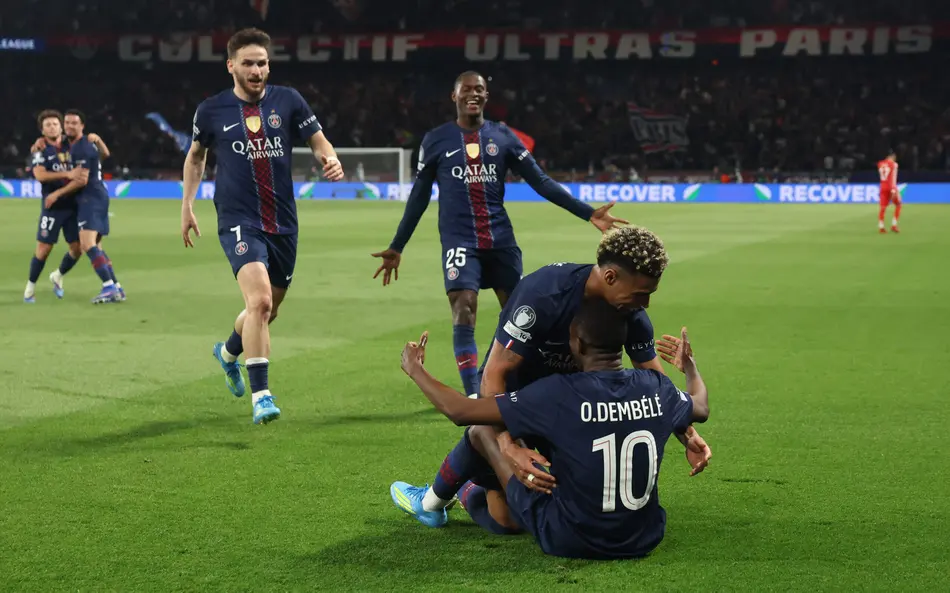
Coming into the second leg PSG already held a narrow aggregate advantage after the unforgettable first encounter in Paris finished 5-4 in favor of the French champions and that first match alone already felt like a final because neither team showed fear, neither team tried to manage the occasion carefully and both sides attacked constantly with a level of intensity that reminded many fans of the greatest Champions League knockout classics from previous decades. Bayern had moments where they exposed PSG defensively while PSG repeatedly punished Bayern’s aggressive high line with speed and directness, especially through Ousmane Dembélé and Khvicha Kvaratskhelia, two players who became absolute nightmares for Bayern throughout the tie.
The return leg in Germany started in the worst possible way for Bayern because PSG scored almost immediately and silence spread around sections of the stadium that had expected a furious Bayern opening. Dembélé scored in the third minute after excellent work from Kvaratskhelia and suddenly Bayern were staring at a mountain to climb against a team that looked increasingly comfortable in these high pressure situations.
That early goal completely changed the emotional temperature of the match because Bayern knew they could no longer afford caution and from that point forward they threw everything at PSG. The German side dominated possession for long stretches and created dangerous situations constantly, but PSG defended with a discipline and collective structure that many people did not think this club possessed a few years ago. Marquinhos delivered one of his best European performances in recent memory while Willian Pacho continued his rise as one of the breakout defensive stars of the season.
One of the most interesting aspects of this PSG side under Luis Enrique is the way they no longer panic during difficult moments because previous PSG teams often looked emotionally unstable in knockout matches once pressure increased, especially away from home, but this version of the team seems far more mature. Even when Bayern were creating chance after chance, PSG stayed connected defensively and continued looking for moments to counterattack instead of collapsing mentally. That psychological transformation may actually be Luis Enrique’s greatest achievement since arriving in Paris because tactically talented PSG teams have existed before, but mentally resilient PSG teams have been much rarer.
Bayern supporters inside the stadium believed an equalizer was coming for almost the entire match and to be fair there were several moments where it genuinely looked inevitable because Harry Kane was constantly dangerous, the crowd never stopped pushing and PSG goalkeeper Matvei Safonov had to produce several important saves under enormous pressure.
The controversy around a possible Bayern penalty also became one of the biggest talking points after the match because German players and fans believed João Neves handled the ball inside the PSG area during a dangerous attacking sequence, but the referee decided not to award the penalty and Bayern never truly recovered emotionally from that moment according to many observers in Germany.
When Harry Kane finally scored deep into stoppage time the stadium exploded because for a brief moment Bayern supporters believed one last miracle attack might still happen, but PSG managed to survive the remaining seconds and once the final whistle arrived the celebrations from the Paris players showed exactly how much this qualification meant to them.
This PSG team is fascinating because it feels very different from the superstar focused projects that defined the club for years. There is still elite talent everywhere on the pitch but the structure of the squad now feels more balanced and more functional. Instead of depending entirely on individual brilliance from one or two global icons, the team now attacks and defends collectively with a level of organization that reflects Luis Enrique’s influence on every aspect of the club. Even players who arrived with enormous reputations have adapted into the system rather than forcing the system to revolve around them.
Ousmane Dembélé has probably become the symbol of this new PSG era because his performances throughout the Champions League knockout rounds have been spectacular and against Bayern he once again delivered in the biggest moment possible with that early goal that changed the entire trajectory of the match. His movement, unpredictability and acceleration caused Bayern endless problems across both legs and there is a strong argument that he has been one of the best players in Europe this season.
At the same time there is now concern around Dembélé’s physical condition heading into the final because he recently suffered what appeared to be a muscular issue during PSG’s league defeat against Paris FC and even though Luis Enrique tried to calm fears afterward, the situation is still being closely monitored by supporters and media across Europe.
The timing of that injury scare could not be worse because PSG are about to play what Luis Enrique himself described as the most important match in the club’s history and losing Dembélé would dramatically change the dynamics of the final against Arsenal.
That upcoming final against Arsenal feels incredibly interesting tactically because both teams represent modern football in very different ways. Arsenal under Mikel Arteta have developed into one of the most organized and intelligent teams in Europe with incredible positional discipline, technical quality in midfield and dangerous attacking patterns that can overwhelm opponents once rhythm starts building.
Arsenal reaching the final is a huge story on its own because for years the club struggled to return to the elite level of European football after the Arsène Wenger era slowly faded away, but Arteta has rebuilt the team patiently and now Arsenal are finally back competing for the biggest prize in club football. Their semi final victory over Atlético Madrid showed maturity, patience and defensive concentration because Diego Simeone’s teams are extremely difficult to eliminate over two legs and Arsenal managed to survive that challenge with discipline and intelligence.
Bukayo Saka once again became decisive for Arsenal during that semifinal and his growth into one of Europe’s elite attackers has been one of the defining stories of modern Arsenal. Around him Arteta has built a squad filled with players entering their prime years together which gives Arsenal supporters hope that this final may only be the beginning of a longer period of European contention rather than a one season miracle.
The final itself will take place in Budapest and UEFA has already confirmed unusual scheduling decisions around the event, including a different kickoff time designed to improve fan accessibility and safety.
From a football perspective the matchup is fascinating because Arsenal and PSG both love controlling possession but they approach attacking football differently. Arsenal rely heavily on structure, rotations and collective movement while PSG often combine structured buildup with moments of explosive verticality through players capable of destroying defensive lines instantly. That contrast could create an incredible tactical battle between Arteta and Luis Enrique, two coaches obsessed with details and positional control.
There is also an emotional dimension surrounding this final because both clubs carry complicated histories in Europe. Arsenal have never won the Champions League and their supporters still remember the pain of losing the 2006 final against Barcelona while PSG spent years being mocked for repeated collapses and expensive failures in Europe before finally changing perceptions with their recent rise. For whichever side loses this final, the disappointment will be enormous because opportunities like this do not come often even for elite clubs.
Luis Enrique deserves enormous credit for the way he transformed PSG’s identity because when he arrived many people still viewed the club as a collection of stars rather than a true football machine, but throughout this Champions League campaign PSG have looked coherent, aggressive and emotionally stable. The pressing structure is sharper, the midfield balance is better and the team seems capable of adapting to different match situations without losing control.
Players like Vitinha have become central to that evolution because his intelligence in midfield allows PSG to escape pressure and maintain rhythm even against elite opponents like Bayern. Against the German side his composure during chaotic moments was incredibly important because Bayern wanted the match to become emotionally frantic while PSG repeatedly tried to slow the game down when necessary.
Kvaratskhelia also deserves huge praise because although Dembélé scored the key goal in Munich, Kvaratskhelia’s contribution across the tie was extraordinary. His ability to eliminate defenders one against one gave PSG an outlet whenever Bayern increased pressure and his assist for Dembélé’s goal in the second leg perfectly captured his quality in transition.
For Bayern this elimination will hurt deeply because they genuinely believed they could win the tournament this year and there were long stretches of the semifinal where they actually played very well. Harry Kane continued scoring, the team attacked with courage and the atmosphere in Munich was electric, but defensive instability across the tie ultimately destroyed them. Conceding five goals in the first leg left Bayern constantly chasing the situation and against a team with PSG’s attacking speed that becomes extremely dangerous.
The reaction in Germany after the elimination was filled with frustration because many Bayern supporters believed small details changed the entire tie. The controversial penalty incident became a major topic while some critics also questioned Bayern’s defensive organization during key moments.
Still, credit has to go to PSG because surviving that environment in Munich required immense concentration and maturity. The old PSG might have collapsed under that pressure but this version stayed together and now they are ninety minutes away from another European crown.
One interesting aspect of the buildup to the final is the contrast in momentum between the two clubs because PSG recently lost their final Ligue 1 match against Paris FC and Luis Enrique publicly criticized the lack of intensity shown by his players.
That defeat itself probably will not matter much in practical terms because PSG had already secured the French title, but psychologically Luis Enrique clearly wanted his players fully focused before the biggest match of the season and he openly admitted disappointment with the performance level.
Arsenal meanwhile arrive at the final with growing confidence and belief after navigating a difficult European path without losing their identity. Arteta has created a squad that plays with enormous emotional energy but also tactical maturity and many neutral fans now see Arsenal as a genuine threat to PSG despite the French club’s recent European success.
The midfield battle in the final could decide everything because Arsenal’s structure in central areas is one of their biggest strengths while PSG rely heavily on midfield control to launch transitions quickly. If Arsenal dominate possession they can suffocate opponents for long stretches, but if PSG manage to break through Arsenal’s pressure then players like Dembélé and Kvaratskhelia become terrifying in open space.
Another huge factor will be experience because PSG now understand what it feels like to win this competition while many Arsenal players will experience a Champions League final for the first time. Sometimes that experience changes everything in decisive moments because managing emotions in these matches is incredibly difficult.
At the same time Arsenal may actually benefit from being slightly underestimated because much of the media attention surrounding the final has focused on PSG’s star power and dramatic semifinal against Bayern. Arsenal thrive when they can quietly prepare without excessive external noise and Arteta will almost certainly use that dynamic to motivate his squad.
The referee appointment for the final has already created discussion as well after UEFA selected Daniel Siebert for the match, a decision that sparked debate among some Arsenal supporters because of previous controversial moments involving the official.
Outside the tactical discussions and controversies there is also a feeling that this final represents a changing of the guard in European football because traditional giants like Real Madrid, Manchester City and Bayern Munich are no longer completely dominating the competition. PSG and Arsenal symbolize two modern projects built differently but both focused on long term evolution rather than short term chaos.
For PSG specifically this run to the final feels far more respected than some of their previous European campaigns because they eliminated elite opposition and showed genuine resilience along the way. The dramatic semifinal against Bayern may ultimately become remembered as the moment this team fully convinced Europe that it belongs among the continent’s true superpowers.
Supporters in Paris are already dreaming about another night of history and the atmosphere around the club has become electric. Social media exploded after the final whistle in Munich while scenes across Paris showed fans celebrating a qualification that felt emotionally exhausting and euphoric at the same time.
For Arsenal supporters the anticipation is equally enormous because this is a chance to finally complete the journey back to the top after years of frustration, rebuilding and near misses. The club has slowly reconstructed its identity under Arteta and now stands one match away from immortality.
Everything about this final feels massive because it is not simply another Champions League decider between established dynasties. It is a meeting between two clubs still chasing permanent European validation, two managers obsessed with football detail and two squads filled with players desperate to define their legacies.
The semifinal between PSG and Bayern already delivered chaos, drama, controversy and unforgettable moments, but the feeling now is that the story still has one final chapter left and it could become the biggest night in the history of both PSG and Arsenal depending on what happens in Budapest.



Leave a Reply