
For nearly two decades, football fans around the world have argued about one question more passionately than perhaps any other sporting debate in modern history.
Who is the greatest player of all time?
For years the answer depended on who you asked. Supporters of Lionel Messi pointed to his unmatched talent, creativity, vision, dribbling ability, and natural understanding of football. Supporters of Cristiano Ronaldo pointed to his incredible goalscoring numbers, physical dominance, longevity, mentality, and success across multiple leagues.
The debate became bigger than football itself. It dominated television shows, social media discussions, barbershop conversations, YouTube videos, podcasts, and newspaper columns. Every goal, every trophy, every missed penalty, every Ballon d’Or ceremony became ammunition for one side or the other.
There was never a definitive answer because both players continued giving their supporters reasons to believe. Yet as the 2026 World Cup begins, something feels different.
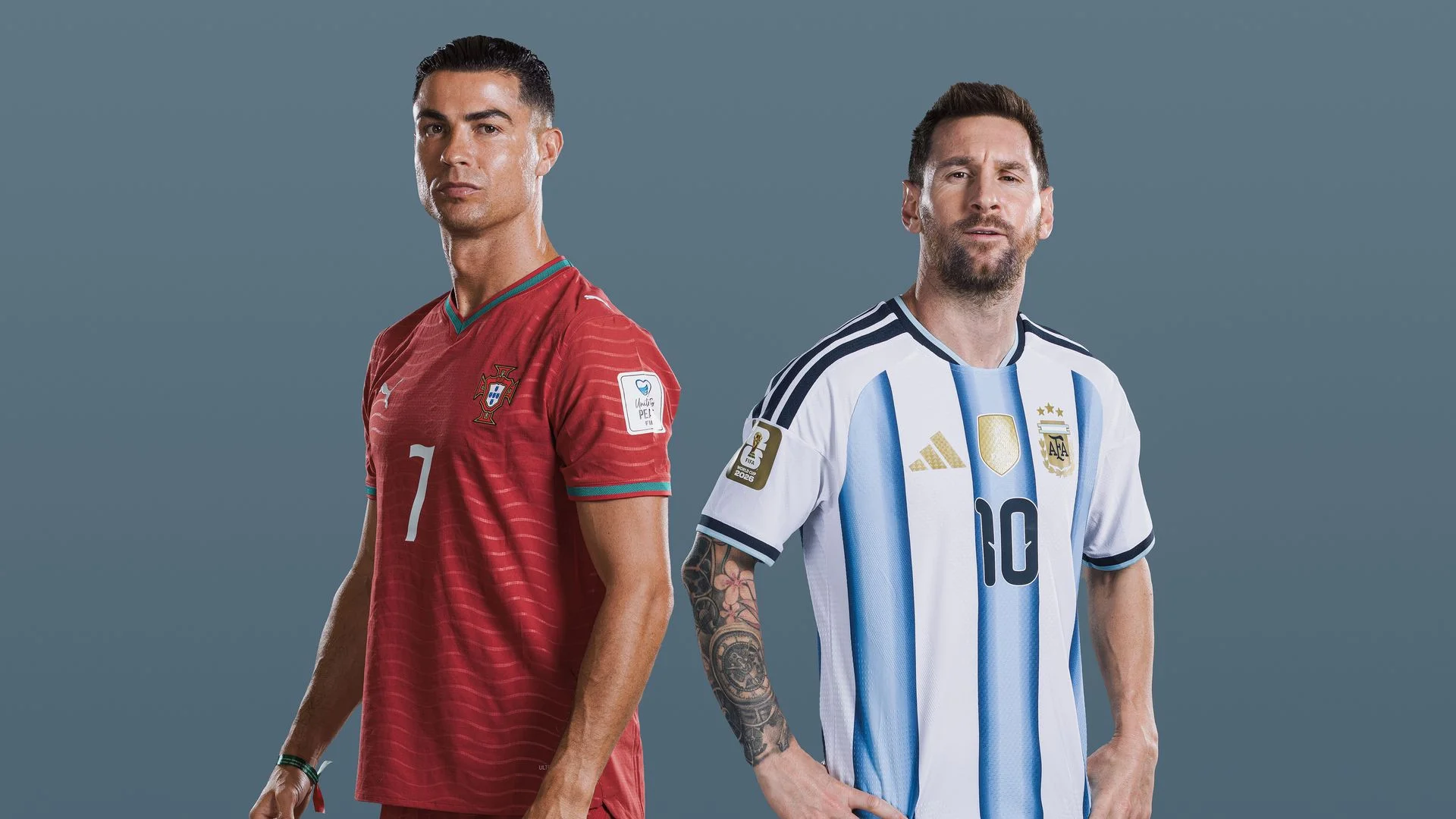
Lionel Messi opened Argentina’s title defense with a stunning hat trick against Algeria, becoming the oldest player ever to score a World Cup hat trick and equaling Miroslav Klose’s all time World Cup scoring record with 16 goals. Argentina won comfortably and Messi looked like the best player on the field despite being nearly 39 years old.
A day later, Cristiano Ronaldo’s Portugal stumbled to a disappointing draw against Congo. Ronaldo failed to score, struggled to influence the match, and received criticism from pundits and fans alike after a largely ineffective performance.
Football is often cruel in the way it creates symbolism, and many observers immediately saw those two games as a reflection of where the debate stands today. One player appeared to be extending an already unmatched legacy, while the other looked increasingly like a legend battling against the inevitable effects of time.
To understand why the conversation feels different today, it is important to remember just how close this rivalry once was. Cristiano Ronaldo was never merely a challenger to Messi’s throne. For long stretches of their careers, many people genuinely believed he was the superior player. When Ronaldo arrived at Manchester United as a teenager, he was an electrifying winger known for stepovers and raw athleticism. Over the years he transformed himself into one of the most efficient goalscorers football has ever seen. His evolution was remarkable because it was built on relentless dedication. Every improvement seemed to come from an obsession with becoming better. He developed his finishing, improved his movement, strengthened his physique, and eventually became a machine capable of scoring fifty or sixty goals every season. Fans admired not only the numbers but also the journey. Ronaldo represented the idea that greatness could be achieved through discipline, sacrifice, and determination.
Messi’s story was very different. While Ronaldo looked like someone who had constructed himself into a superstar through endless work, Messi often appeared as if he had been touched by something supernatural. Watching him play in his early years at Barcelona felt like watching someone operate according to different rules. Defenders knew exactly what he wanted to do and still could not stop him. Coaches spent years trying to develop systems capable of containing him, only to watch those plans fall apart within minutes. His dribbling, vision, balance, passing, and decision making created the impression that he was seeing the game several seconds ahead of everyone else. Supporters of Messi argued that football was ultimately about what happened on the pitch, and no player in history had ever controlled matches quite the way he could.
The rivalry reached another level in 2009 when Ronaldo joined Real Madrid. Suddenly the two greatest players in the world were competing directly against each other in the same league. Every El Clásico became a global event. Millions of people tuned in not only to watch Barcelona face Real Madrid but also to witness the latest chapter in the Messi versus Ronaldo story. Week after week they pushed each other to absurd levels. Before their era, scoring forty goals in a season was considered extraordinary. They turned it into something routine. Then they began scoring fifty, sixty, and sometimes even more. Records that had stood for decades disappeared one after another. Every time one player produced something extraordinary, the other seemed determined to answer immediately.
Yet despite all the goals, trophies, and individual awards, the debate eventually became centered on one issue: international football. Ronaldo supporters believed this was where their argument became strongest. While Messi dominated club football with Barcelona, Argentina repeatedly fell short in major tournaments. The failures were painful and frequent. Argentina lost the 2007 Copa América final. They lost the 2014 World Cup final. They lost the 2015 Copa América final. They lost the 2016 Copa América final. Every defeat created a new wave of criticism. The closer Messi came to international glory, the more painful the disappointment seemed when it slipped away. No loss hurt more than the 2014 World Cup final against Germany. Argentina stood one match away from football immortality. Messi had carried enormous expectations throughout the tournament, and many believed this would be the moment that silenced every remaining critic. Instead, Germany emerged victorious, and the image of Messi walking past the World Cup trophy became one of the defining photographs of his career.
By contrast, Ronaldo’s international legacy received a massive boost in 2016 when Portugal won the European Championship. Although Ronaldo suffered an injury in the final, Portugal still lifted the trophy, and the victory transformed how many people viewed the debate. Suddenly the player who had once been criticized for lacking international success had a major trophy with his national team, while Messi continued searching for his first. For perhaps the first time, a significant portion of the football world believed Ronaldo had moved ahead. Combined with Real Madrid’s dominance in the Champions League during that period, the Portuguese star appeared to have built a compelling case for himself as the greatest player of the modern era.
Then everything changed. After years of heartbreak, Messi finally won the Copa América in 2021. The significance of that triumph cannot be overstated. It was much more than a single trophy. It represented the end of a narrative that had followed him throughout his entire career. For years people had claimed he could not deliver for Argentina. For years they had questioned his leadership, his commitment, and his ability to succeed outside Barcelona. The Copa América victory did not erase his previous disappointments, but it fundamentally changed the conversation. The pressure that had haunted him for over a decade suddenly disappeared, and for the first time in years Messi appeared liberated whenever he wore the Argentine shirt.
The ultimate chapter arrived in Qatar in 2022. Few World Cups have carried as much emotional weight for a single player as that tournament carried for Messi. The shocking opening defeat against Saudi Arabia immediately raised fears that his final World Cup would end in disappointment. Instead, it became the defining achievement of his career. Argentina responded magnificently, and Messi delivered one unforgettable performance after another. He scored crucial goals, created opportunities, inspired teammates, and embraced the pressure that had once seemed so overwhelming. By the time Argentina defeated France in one of the greatest World Cup finals ever played, the conversation surrounding Messi had changed forever. The trophy that had eluded him for so long was finally his.
For many football fans, that night effectively ended the debate. It was not simply that Messi won the World Cup. It was the manner in which he won it. He was not a passenger in a talented team. He was the central figure, the leader, and the inspiration behind Argentina’s triumph. The achievement completed a résumé that was already extraordinary. Suddenly the biggest argument against him no longer existed. The one missing piece had been found.
That is why the opening week of the 2026 World Cup feels so significant. Messi’s hat trick against Algeria did not create his legacy. That legacy was already secure. What it did was reinforce the idea that even at an age when most legends have faded into the background, he remains capable of producing moments that capture the imagination of the football world. Ronaldo, meanwhile, continues to command enormous respect for everything he has achieved, but the performances are no longer carrying the same impact. The gap between what Messi is producing and what Ronaldo is producing has become increasingly difficult to ignore.
None of this diminishes Ronaldo’s greatness. He remains one of the most accomplished footballers in history. His records, trophies, and influence on the sport ensure that his place among football’s immortals is secure. Entire generations of players have attempted to emulate his mentality and professionalism. Few athletes in any sport have inspired as many people. However, greatness exists on different levels, and as the years have passed, more and more fans have begun to believe that Messi occupies a level of his own.
Perhaps the most remarkable aspect of Messi’s story is that the criticism that once defined him ultimately became the reason his legacy grew even stronger. The years of disappointment made the victories more meaningful. The failures made the redemption more powerful. The player who was once accused of lacking international success ended up winning everything. The player who was once compared unfavorably to Maradona ended up delivering Argentina’s greatest football moment in decades. And now, as he continues producing magical performances deep into his late thirties, the question that once divided football appears increasingly difficult to answer in any way other than his favor.
The rivalry between Lionel Messi and Cristiano Ronaldo gave football one of the greatest eras the sport has ever seen. It pushed both players to unimaginable heights and created memories that will survive for generations. Yet as the 2026 World Cup unfolds and Messi continues adding new chapters to his already extraordinary story, more and more people are arriving at the same conclusion. The debate that once seemed impossible to settle may finally have its answer.



Leave a Reply