
For decades, England supporters have entered major tournaments carrying a familiar mixture of hope, excitement and caution. Every generation has produced outstanding footballers, every tournament has generated dreams of ending the country’s long wait for another World Cup triumph, and every campaign has been accompanied by enormous expectations. As the 2026 FIFA World Cup unfolds across the United States, Canada and Mexico, the same questions once again dominate conversations among supporters, pundits and former players: can England finally lift the trophy for the first time since 1966, and are the Three Lions truly capable of going all the way?
Thomas Tuchel’s side began their campaign with an entertaining victory over Croatia before being frustrated by Ghana in their second group match, leaving supporters optimistic but also aware that significant improvements will be needed if the team is to survive the challenges that await in the knockout rounds. England remain among the favorites to win the competition, yet history has repeatedly shown that talent alone rarely guarantees success at the World Cup.
The reality is that England possess one of the strongest squads in international football, arguably the deepest pool of attacking talent in the tournament and a manager with vast experience in elite knockout competitions. However, the road to the final is expected to be filled with dangerous opponents including traditional powerhouses such as Spain, France, Argentina, Brazil, Germany and Portugal, all of whom also believe they can become world champions.
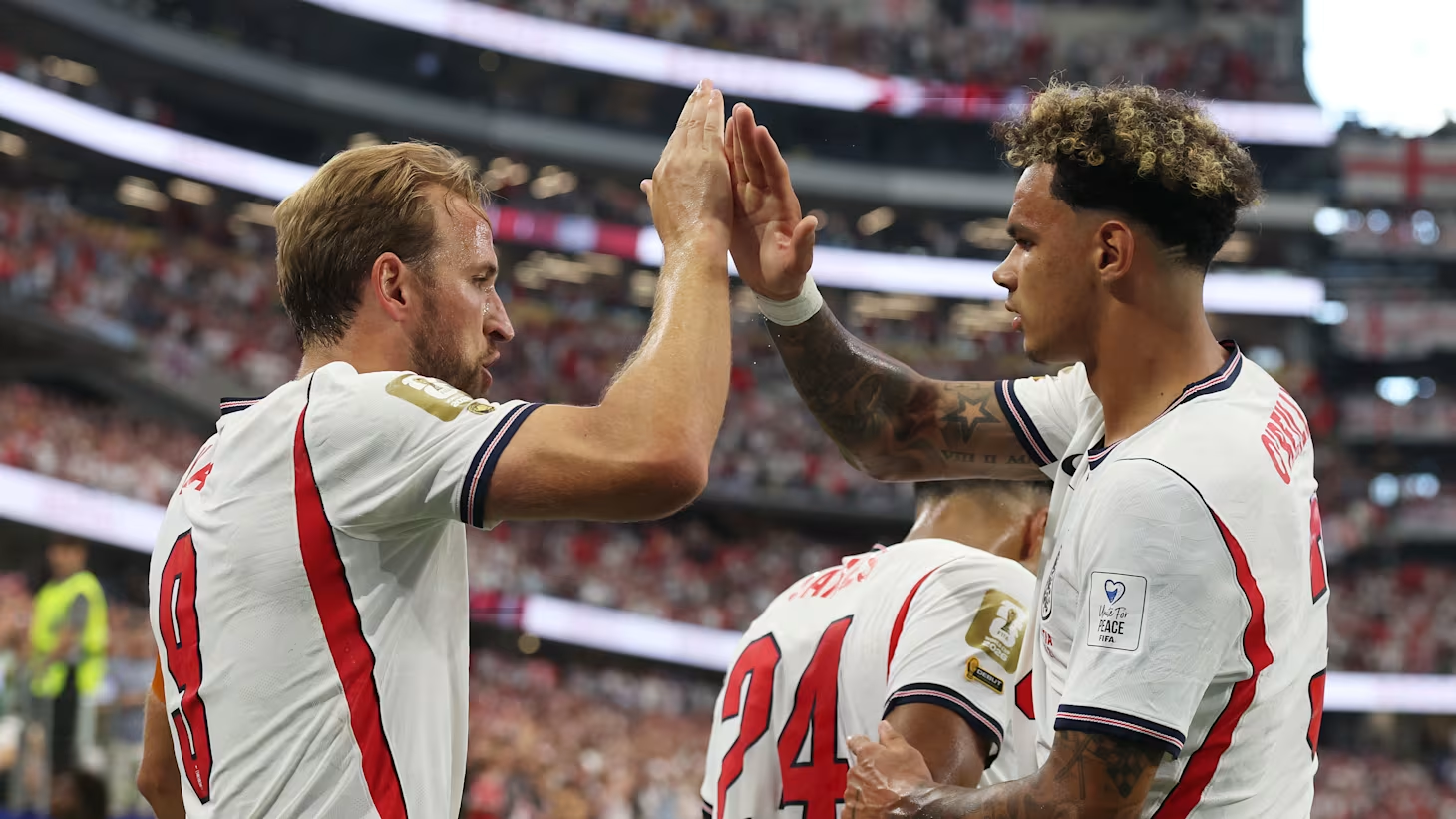
England opened their World Cup campaign on June 17 with a highly anticipated clash against Croatia in Dallas. The match immediately demonstrated both the strengths and weaknesses of Tuchel’s team. England eventually secured an impressive 4-2 victory, with Harry Kane scoring twice while Jude Bellingham and Marcus Rashford also found the net. The attacking display delighted supporters and reinforced the belief that this England squad possesses enough firepower to compete with anyone in the world. At times, the movement, creativity and intensity of England’s attacking play looked outstanding, particularly during the second half when Croatia struggled to contain the Three Lions.
Harry Kane once again proved why he remains one of the world’s elite strikers. Despite entering his thirties, the captain continues to combine clinical finishing with intelligent link up play and leadership. His two goals against Croatia highlighted his ability to perform on the biggest stage, an essential quality if England are to make a deep run in the tournament. Meanwhile, Jude Bellingham delivered another influential performance, further strengthening his reputation as arguably the most complete midfielder in world football. Marcus Rashford’s goal also provided an important confidence boost for both player and team.
England’s second group match against Ghana, however, presented a completely different challenge. Ghana defended deep, remained disciplined throughout and successfully frustrated Tuchel’s side during a goalless draw in Massachusetts. England dominated possession but struggled to create clear opportunities, exposing an issue that has occasionally affected the team during recent tournaments. When opponents sit deep and deny space behind the defense, England can sometimes appear short of ideas and become overly reliant on individual moments of inspiration.
The draw against Ghana should not be viewed as a disaster. World Cups are filled with difficult matches against defensively organized opponents, and many eventual champions have experienced frustrating group stage results before finding their rhythm later in the competition. Nevertheless, the performance highlighted areas requiring improvement before the knockout rounds begin. England still have one group match remaining against Panama, a fixture that could determine whether they finish first in Group L and potentially secure a more favorable path through the tournament.
One of the biggest differences between this England squad and previous generations is the presence of Thomas Tuchel on the touchline. The German coach arrived with an impressive managerial resume that includes winning the UEFA Champions League with Chelsea and guiding several major European clubs through intense knockout competitions.
Tuchel’s experience in tournament football could prove invaluable. Throughout his club career, he has repeatedly demonstrated an ability to prepare teams tactically for individual opponents, make decisive in game adjustments and manage pressure in high stakes situations. International football often rewards coaches capable of adapting quickly, and Tuchel possesses exactly that reputation.
The manager has also attempted to introduce a more aggressive and flexible tactical approach. England have alternated between different systems, allowing the team to adapt according to opponents and available personnel. Against Croatia, England’s attacking structure looked fluid and dynamic, with players regularly changing positions and creating overloads in advanced areas. This tactical flexibility could become one of England’s greatest strengths during the knockout rounds.
However, Tuchel is still relatively new in international football compared with managers who have spent years working with national teams. Building chemistry in a short period remains challenging, particularly in a tournament environment where recovery time between matches is limited. The coming weeks will reveal whether Tuchel can successfully translate his club achievements onto the international stage.
If England are to become world champions, Jude Bellingham will almost certainly play a central role.
Still remarkably young, Bellingham already performs with the maturity and authority of a veteran. His ability to influence every phase of the game makes him uniquely valuable. He can defend, progress possession, create opportunities and score crucial goals. Very few midfielders in world football offer such a complete skill set.
Bellingham also appears comfortable under immense pressure. Throughout his club career and previous international tournaments, he has consistently delivered in decisive moments. His goal against Croatia once again highlighted his capacity to rise to the occasion.
Many observers believe Bellingham could become the defining player of this World Cup. If he maintains top form throughout the knockout rounds, England’s chances of lifting the trophy increase significantly.
The Competition England Must Overcome
Winning a World Cup has never been more difficult.
Spain entered the tournament as one of the leading favorites after dominating European football in recent years. Their technical quality and tactical cohesion make them extremely dangerous. France continue to possess extraordinary talent throughout the squad and have developed a remarkable consistency in major tournaments. Argentina remain formidable despite changes following Lionel Messi’s era, while Brazil always carry immense expectations and continue to produce elite players. Germany have shown signs of resurgence, Portugal boast exceptional depth and the Netherlands remain capable of defeating any opponent.
England therefore face a daunting challenge. Becoming world champions likely requires defeating at least two or three elite nations consecutively during the knockout rounds.
Recent betting markets and predictive models have generally placed England among the top five favorites, alongside Spain, France, Argentina and Brazil. Some simulations estimate England’s chances of winning the tournament at approximately ten percent, which illustrates both their genuine potential and the inherent difficulty of winning seven matches against world class opposition.
The Psychological Factor
England’s relationship with tournament pressure has long fascinated football observers.
For decades, enormous expectations from supporters and media created intense pressure on players. Previous generations often appeared burdened by the weight of history, particularly during penalty shootouts and decisive knockout matches.
Recent England teams have gradually changed that narrative. Reaching the semifinal of the 2018 World Cup, the final of Euro 2020 and another European Championship final appearance demonstrated that modern England sides are increasingly comfortable competing in major tournaments.
Tuchel’s calm and methodical approach may also help reduce external pressure. His experience managing elite players under intense scrutiny should provide additional stability during difficult moments.
England’s Possible Path Through the Knockout Rounds
The expanded 48 team format creates a more complicated tournament structure than previous World Cups. Group winners and runners up advance alongside the best third placed teams, meaning knockout paths remain fluid until the conclusion of the group stage. England’s final position in Group L will significantly influence the caliber of opposition they encounter in the Round of 32.
Finishing first would likely provide England with a more favorable route and avoid certain heavyweight opponents in the early knockout rounds. Finishing second could immediately create difficult matchups against strong nations such as Portugal or Colombia depending on final standings. The final group match against Panama therefore carries considerable importance despite England already occupying a strong position in the group.
History repeatedly demonstrates that momentum matters enormously at World Cups. Teams that finish the group stage strongly often carry confidence into the knockout rounds. England will hope to secure a convincing victory against Panama and enter the elimination phase with renewed momentum.
So, Can England Actually Win the 2026 World Cup?
The simple answer is yes.
England possess the talent, squad depth, managerial expertise and tournament experience required to become world champions. Few nations can match the quality available to Thomas Tuchel across every area of the pitch. The combination of Harry Kane’s goals, Jude Bellingham’s all around brilliance, outstanding attacking depth and an experienced manager gives England a legitimate opportunity to lift the trophy.
Yet being capable of winning and actually winning are very different things.
World Cups are decided by fine margins. One defensive mistake, one missed chance, one controversial decision or one penalty shootout can completely alter a nation’s destiny. England have already shown during the opening phase of the tournament that they can produce excellent football, but they have also demonstrated vulnerabilities that elite opponents will attempt to exploit.
England remain firmly among the favorites and there is genuine belief that this generation could finally end nearly sixty years of waiting. The coming weeks will determine whether the Three Lions can transform potential into history.
For now, England supporters have every reason to dream.



Leave a Reply