

The landscape of international football is shifting under the weight of sheer narrative destiny in North America, as the England men’s national football team has officially punched its ticket to the semi-finals of the FIFA World Cup 2026. Under the tactical and unapologetically demanding stewardship of Thomas Tuchel, this iteration of the Three Lions has cast aside the historical shackles of hesitation, replacing them with an elite level of psychological resilience and sheer desperation that has left a trail of dramatic, late-game triumphs in its wake. England's captivating journey through the tournament reached a fever pitch at the Miami Stadium in Florida on Saturday, where they locked horns with a formidable Norway side in a high-stakes quarter-final that eventually pushed beyond the confines of regular time to solidify a breathtaking 2-1 victory after extra time. The defining tactical storyline of this unforgettable match was England's ability to completely smother the prolific Norwegian talisman Erling Haaland, effectively snapping his relentless streak of scoring in every single match of the tournament by completely isolating him from his creative midfield core, while Thomas Tuchel's elite substitutions and high-pressing architecture simultaneously allowed the Three Lions' own superstars to completely command the spotlight when everything hung in the balance.
The encounter in Miami unfolded with a palpable tension that gripped fans across the globe, reaching a dangerous low point for the English faithful in the 36th minute when the young midfielder Andreas Schjelderup found the back of the net to give Norway a thoroughly deserved 1-0 lead, a blow that tested the collective mettle of a side that has frequently succumbed to tournament anxiety in generations past. Yet, as has become the defining characteristic of this 2026 squad, England refused to panic and instead orchestrated a methodical response right on the stroke of halftime, finding their crucial equalizer in the second minute of first-half stoppage time through an absolute moment of brilliance from Jude Bellingham. Returning to the pitch for a grueling second half, both nations traded fierce tactical punches and high-octane sequences, leading Thomas Tuchel to unleash his tactical bench depth by introducing Bukayo Saka and Eberechi Eze at halftime for Noni Madueke and Declan Rice, additions that injected an immense amount of width and technical pacing into an English attack that had occasionally looked stagnant against a deep-lying Norwegian defensive block. As the match progressed into a fiercely contested extra-time period, the sheer physical preparation and unyielding mental endurance of this English group completely took over the narrative, culminating in a spectacular, match-winning brace for Bellingham in the 93rd minute that sent millions of fans into absolute delirium and ultimately forced Tuchel to shut the shop by bringing on Dan Burn to solidify a rigid defensive blockade that successfully neutralized Norway's desperate late-game aerial assault.
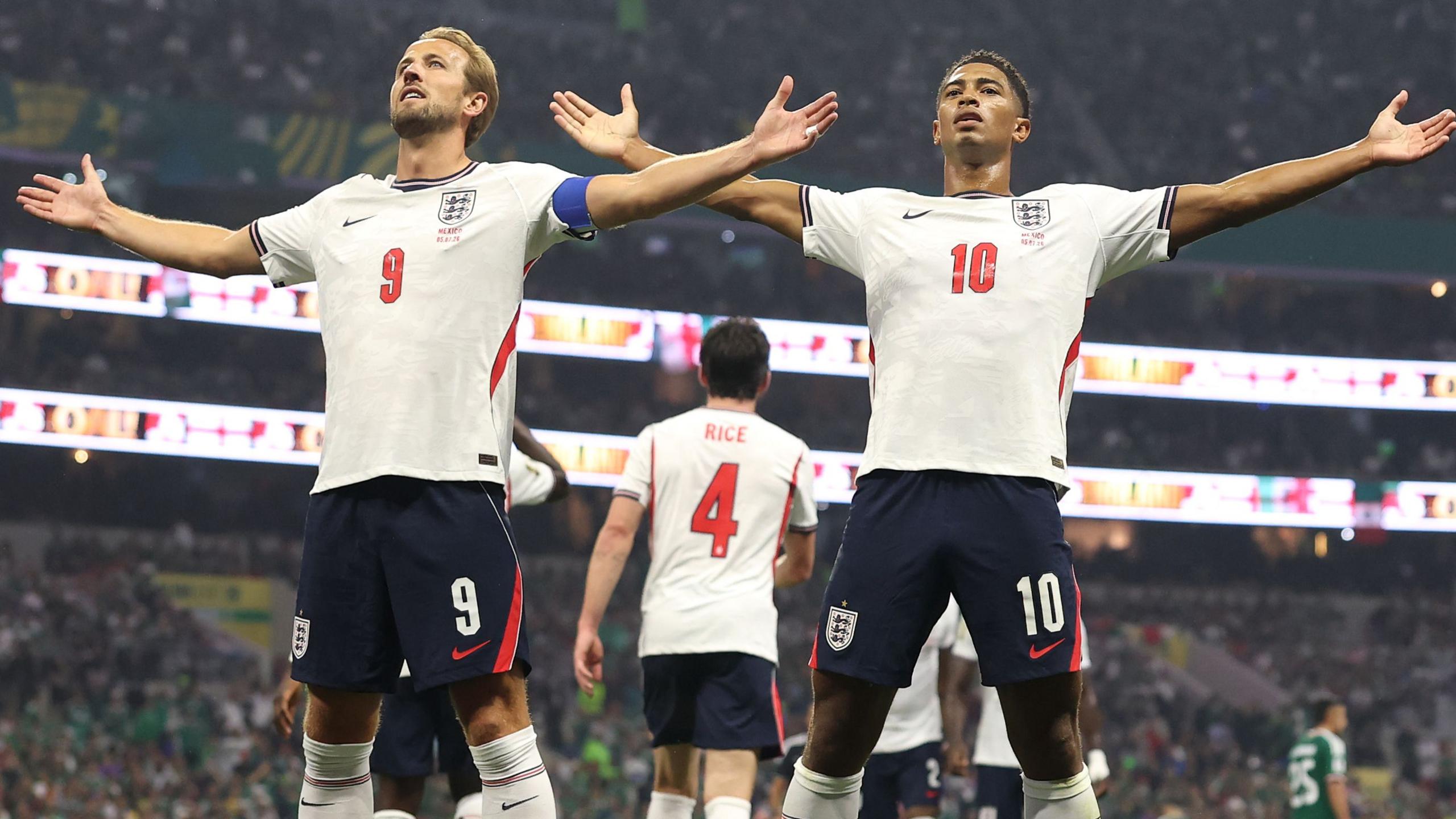
This triumph not only secured England's coveted place in a World Cup semi-final for the first time since their memorable run in Russia back in 2018, but it also saw their two primary catalysts, Harry Kane and Jude Bellingham, comfortably etch their names into the absolute stratosphere of international football history by achieving a statistical feat that has literally never been seen in the modern era of the tournament. By surviving the challenges of the knockout stages, Kane and Bellingham became the first two teammates from the exact same country to each score six or more goals in a single edition of a FIFA World Cup, establishing an unprecedented modern benchmark of shared attacking brilliance that completely shatters the traditional trope of a national team relying on a singular, isolated focal point for its offensive production. Currently sitting side-by-side and joint-third in the tournament's overall scoring charts with six goals apiece, the lethal tandem trails only Norway's departing giant Erling Haaland on seven goals, as well as the legendary figures of Argentina’s Lionel Messi and France’s Kylian Mbappé, who both sit at the summit with eight goals each in what is rapidly turning into one of the most statistically explosive Golden Boot races in the modern history of the sport.
To truly appreciate the magnitude of what Thomas Tuchel's men are accomplishing on North American soil, one must meticulously analyze the winding, chaotic, and heavily scrutinized path that the Three Lions have carved out across the group stages and the subsequent knockout rounds, a journey that has defined itself far less by structural aesthetic dominance and far more by a grim, unwavering refusal to accept defeat. England kicked off their World Cup campaign in Group L with a highly chaotic and physically demanding 4-2 victory over a resilient Croatia side at the Dallas Stadium in Texas, a match that immediately signaled their immense attacking potential but simultaneously raised significant red flags regarding their structural defensive transition when facing elite opposition. This explosive start was promptly followed by a frustratingly sterile and heavily criticized 0-0 stalemate against Ghana at the iconic Boston Stadium in Massachusetts, a performance that drew immense ire from traditional media pundits who lamented a perceived lack of creative fluidity in the final third, though the team quickly rectified their trajectory in the final group fixture by securing a thoroughly professional and highly composed 2-0 victory over Panama at the New York New Jersey Stadium to comfortably secure their passage into the newly expanded knockout format.
Once the unforgiving single-elimination rounds commenced, the sheer theatricality of England's tournament run shifted into overdrive during the historic Round of 32 in Atlanta, where they were forced to dig incredibly deep into their psychological reserves to execute a frantic, late-game comeback against a highly physical and structurally disciplined DR Congo national team. Falling into dangerous territory as the clock ticked away, it was the irreplaceable captain Harry Kane who completely put the nation on his back, striking twice in the dying embers of the second half to secure a miraculous 2-1 victory that kept the English dream alive and showcased an elite level of leadership that resonated deeply throughout the entire dressing room. That narrow escape set up an absolutely legendary, multi-layered Round of 16 battle against the host nation Mexico at the iconic Mexico City Stadium, an encounter that will undoubtedly go down as one of the most emotionally exhausting and disciplinary-strained matches in modern World Cup history, featuring a dramatic opening minute yellow card, a highly controversial 54th-minute straight red card issued to young defender Jarel Quansah, and an absolute barrage of local atmospheric pressure that would have easily broken lesser teams. Despite being reduced to ten men for nearly forty minutes of gameplay and conceding goals to the dangerous duo of Julián Quiñones and Raúl Jiménez, England displayed an almost miraculous level of defensive positioning and counter-attacking efficiency, utilizing another spectacular Jude Bellingham double within a breathless two-minute window alongside a brutally cold-blooded second-half penalty from Harry Kane to somehow emerge from the cauldron of Mexico City with an epic, definitive 3-2 victory.
The individual excellence of Harry Kane throughout this entire cycle simply cannot be overstated, as the veteran striker continues to redefine the modern parameters of what it means to be an elite international number nine, seamlessly blending his world-class, lethal finishing ability within the eighteen-yard box with an immensely sophisticated, deep-dropping playmaker role that routinely unlocks opposing midfields. Even when facing immense physical fatigue and suffocating man-marking systems designed explicitly to nullify his movement, Kane's tactical intelligence allows him to drag central defenders completely out of position, creating massive pockets of half-space for inverted wingers and overlapping midfielders to exploit, a selflessness that is perfectly balanced by his own clinical execution during defining moments, such as his ice-cold game-winners against DR Congo and his flawless penalty execution under the immense atmospheric pressure of the Mexican home crowd. His extraordinary synergy with Jude Bellingham has quickly evolved into the most terrifying offensive partnership in world football, creating a fluid, constantly rotating tactical dynamic where the two superstars alternate roles as the primary target man and the late-arriving box threat, a structural nightmare that leaves opposing managers completely incapable of constructing a singular defensive blueprint to stop them both simultaneously.
On the other end of this historic tandem stands Jude Bellingham, whose meteoric ascension at this World Cup has completely captivated the global sporting consciousness, firmly establishing the Real Madrid superstar as the psychological heartbeat and the undisputed big-game specialist of this modern English era. Bellingham's statistical profile across this tournament reads like an absolute masterclass in complete midfield dominance, highlighted by an astonishing 8.75 rating during his goal-and-assist performance against Panama, an elite 8.18 rating against Mexico where his quick-fire double completely turned the tide of the knockout match, and a grueling, lungs-bursting 111-minute shift against Norway where he recorded 31 accurate passes, drew four crucial fouls, and single-handedly carried the attacking transition of a exhausted ten-man infrastructure. What truly elevates Bellingham into a tier entirely of his own is an almost arrogant, unwavering confidence that manifests in the most critical, hyper-pressurized moments of a match, a rare psychological trait that allows him to demand the ball when his teammates are faltering and produce historic, legacy-defining moments like his 93rd-minute extra-time winner that ultimately broke the back of a courageous Norwegian side.
As the global footballing community collectively catches its breath following a weekend of unprecedented quarter-final drama, a historic and fiercely emotional international rivalry is officially set to be renewed on Wednesday, July 15, 2026, when England makes a highly anticipated return to the Atlanta Stadium in Georgia to battle the reigning world champions, Argentina, in an absolutely blockbuster semi-final clash. This monumental encounter will mark the first time these two traditional powerhouses have crossed paths on a World Cup pitch since their iconic group-stage battle all the way back in 2002, a legacy that carries decades of historical tension, controversial moments, and unforgettable individual displays that will undoubtedly add an immense layer of pressure onto the shoulders of both sets of modern players. With the defending champions Argentina coming off their own grueling, emotionally draining 3-1 extra-time victory over a highly resilient Switzerland side just hours after England's triumph in Miami, both squads will enter the historic Atlanta arena carrying immense physical wear and tear, meaning the tactical battle between Thomas Tuchel and his Argentine counterpart will likely come down to structural squad rotation, mid-match adjustments, and which side possesses the psychological fortitude to survive another ninety to one hundred and twenty minutes of absolute international football warfare.
With a highly coveted spot in the FIFA World Cup 2026 Final hanging in the balance—a grand finale scheduled to take place on Sunday, July 19, at the spectacular New York New Jersey Stadium against either a structurally pristine France or a highly technical Spain side—the narrative stakes for this English golden generation have officially reached an absolute zenith. For Thomas Tuchel, a manager brought in explicitly to erase decades of near-misses and tactical stagnation, the upcoming battle in Atlanta represents the ultimate litmus test of his modern footballing philosophy, offering an unparalleled opportunity to guide the Three Lions to their first World Cup final appearance since the legendary, standard-setting triumph of 1966. Backed by the historic, record-shattering goal-scoring exploits of a rejuvenated Harry Kane and a generational force of nature in Jude Bellingham, England no longer looks like a team merely hoping to navigate the treacherous waters of international tournament football; instead, they possess the structural look of an elite, battle-hardened collective that is fully prepared to stare down the reigning champions of the world, break through the glass ceiling of historical anxiety, and definitively claim their rightful place at the absolute pinnacle of global sports.

0 Comments