
The summer transfer window always finds a way to deliver high-stakes drama, but few narratives in recent memory have captured the imagination of the global footballing ecosystem quite like the summer saga surrounding Vinícius Júnior. For several months, rumors swirled across European media outlets regarding the long-term future of the Brazilian superstar at the Santiago Bernabéu. With his contract entering a pivotal period and Premier League powerhouses casting admiring glances across the continent, football supporters were left wondering whether the ultimate attacking icon of Real Madrid’s current era might actually be persuaded to embark on a fresh chapter in his decorated career. The rumors reached fever pitch when Arsenal emerged as genuine contenders for his signature, fueled by their own incredible rise under Mikel Arteta and their burning ambition to dominate both English and European football. Yet, when the dust finally settled following weeks of intense speculation, tactical maneuvers, and high-level board discussions, Real Madrid delivered a definitive statement that echoed across the global sports landscape. The announcement arrived on a late summer afternoon, confirming that Vinícius Júnior had officially put pen to paper on a mammoth contract extension tying him to the Spanish giants until June 30, 2032. This monumental six-year deal effectively quashed any lingering transfer talk, re-establishing the twenty-six-year-old as the fundamental centerpiece of the club’s ambitious long-term project and putting an absolute end to one of the most intriguing transfer sagas in modern football history.
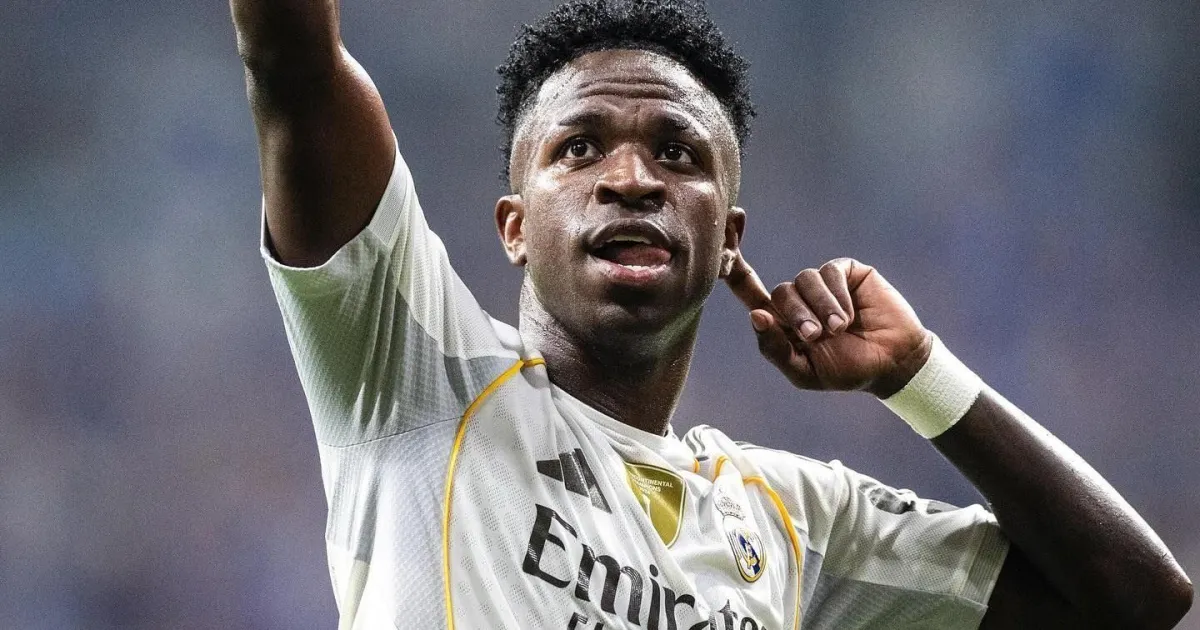
To fully comprehend the magnitude of this entire transfer saga and the panic that briefly gripped the Real Madrid faithful, one must trace the timeline back to the underlying dynamics inside the Bernabéu dressing room over the preceding two seasons. Following an era of immense triumph that included multiple La Liga crowns and two UEFA Champions League trophies, the ecosystem in Madrid underwent significant structural and tactical evolution. The introduction of high-profile superstars created a hyper-competitive environment and a delicate dynamic within the squad. As Real Madrid navigated back-to-back domestic campaigns where they finished as runners-up to domestic rivals Barcelona, alongside intense pressure stemming from Paris Saint-Germain’s dominance in continental competition, media scrutiny on the team’s superstar core escalated rapidly. Commentators and pundits routinely questioned whether the team’s tactical setup was capable of maximizing all of its elite attacking assets simultaneously without causing friction. Within this atmosphere of relentless public commentary, rival clubs began sensing a potential vulnerability, monitoring whether Vinícius Júnior might feel undervalued or intrigued by the prospect of becoming the undisputed single focal point of an elite project elsewhere.
It was precisely within this opening that Arsenal saw an unprecedented opportunity to make a generational statement in the market. Under the leadership of Premier League champions Arsenal, the North London club had established itself as an absolute powerhouse capable of going toe-to-toe with the world’s best. Internal recruitment discussions at Arsenal quickly identified the Brazilian international as the dream signing to elevate their frontline into an unstoppable unit. Reports began surfacing across both British and Spanish press details regarding Arsenal’s genuine intrigue and exploratory moves. The Gunners possessed both the financial muscle and the sporting appeal to pitch a project where Vinícius would be granted complete freedom on the left flank, backed by a tactical system custom-tailored to his explosive pace, creative flair, and goalscoring instinct. As the speculation gained real momentum, the narrative shifted from a fantasy transfer query into a legitimate saga, with supporters debating whether the lure of Premier League football and a premier leadership role could entice the winger away from the capital of Spain.
The narrative gained additional layers of complexity following an event-filled summer international schedule. Vinícius spent a significant portion of his off-season carrying the weight of a nation on his shoulders while representing Brazil on the world stage. Despite a frustrating collective exit for the national team in the round of sixteen against a resilient Norway side, Vinícius personally shone as Brazil’s standalone top performer and leading scorer across the tournament, netting four crucial goals. His individual performances proved beyond any shadow of a doubt that he remained at the absolute pinnacle of his athletic powers, possessing the rare ability to dismantle world-class defenses entirely on his own. Upon returning from international duty, the player found Real Madrid at a pivotal structural crossroads. The club was ushering in a brand new era under José Mourinho, who returned to the helm at the Bernabéu for a high-profile second stint as head coach following a period of managerial transition. With a new manager at the helm and the squad determined to snap a two-year drought without a major trophy, resolving the long-term contract situation of their primary superstar became an immediate and non-negotiable directive for club president Florentino Pérez and the sporting directors.
Behind closed doors, the negotiation process required absolute precision, clear communication, and unwavering trust between the player’s representation and the executive board. Real Madrid understood that simply offering a routine extension would not be enough; they needed to demonstrate a total commitment to Vinícius Júnior’s role as the definitive icon of the club’s sporting identity. While financial parameters were obviously a substantial factor given the soaring market valuations for elite world talent, the primary focus of the discussions centered on footballing guarantees, squad status, and long-term ambition. Real Madrid moved aggressively to structure a landmark six-year agreement running until June 2032, securing his peak physical and prime career years completely within the confines of the Santiago Bernabéu.
When Real Madrid officially published the brief yet historic statement on their official channels confirming the agreement until 2032, it triggered a massive wave of celebration among Los Blancos supporters globally. Vinícius himself immediately took to social media to cement his bond with the fanbase, sharing an emotional post stating that eight years at the Bernabéu were simply too few and that he was thrilled for six more years and forever. Since arriving in the Spanish capital as an eighteen-year-old prodigy from Flamengo back in 2018, his trajectory has been nothing short of legendary. Over the course of three hundred and seventy-five official appearances in the famous white shirt, he has amassed an astounding tally of one hundred and twenty-eight goals and one hundred assists, playing a central role in capturing fourteen major trophies, including three La Liga titles and two UEFA Champions League triumphs highlighted by his iconic final-winning goals. By choosing to reject the siren calls of Premier League interest and committing his entire future to Real Madrid, Vinícius Júnior did far more than sign a contract; he made a definitive statement about legacy, loyalty, and his relentless pursuit of footballing greatness at the standard-bearer of European football.



Leave a Reply