

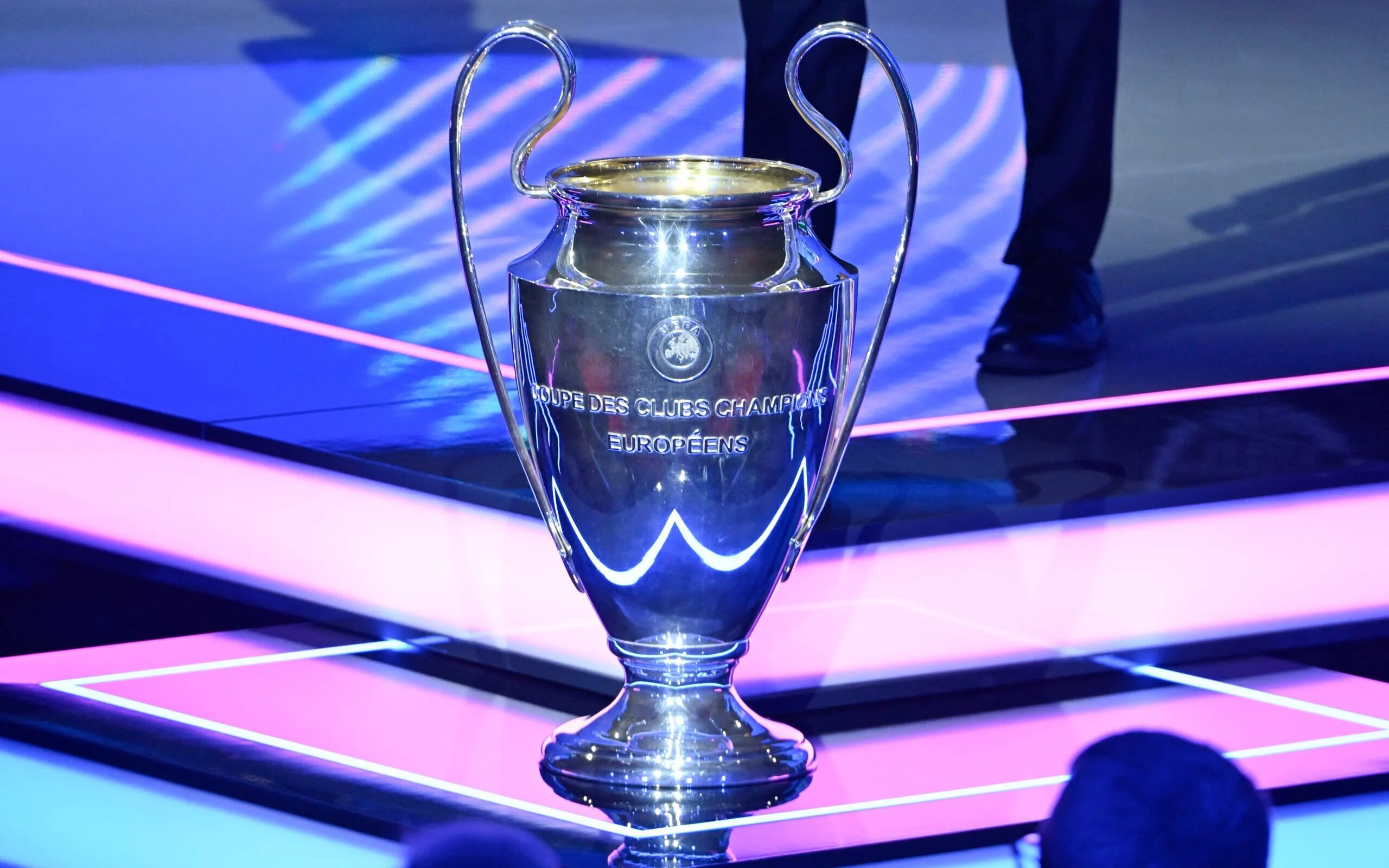
The official draw for the 2026/27 UEFA Champions League league phase, hosted at the Grimaldi Forum in Monaco on Thursday, August 27, 2026, has firmly established the battlefield for the seventy-second season of Europe's premier club competition. Entering its third full edition under the single-table Swiss-system framework, the tournament gathers thirty-six elite football clubs into one consolidated standings table, eliminating the traditional four-team group stage in favor of eight unique matches per club.
The mechanics of this 36-club league phase represent an intricate mathematical architecture designed to guarantee competitive parity and high-stakes football from the opening whistle in September through the final league fixtures in late January. Each competing club was placed into one of four seeding pots containing nine teams, structured primarily on UEFA club coefficients accumulated over recent domestic and continental campaigns. Rather than playing home-and-away ties against three group opponents, every team was drawn against two opponents from each of the four pots, ensuring that even the highest-seeded powerhouses face two fellow Pot 1 elites, two Pot 2 challengers, two Pot 3 contenders, and two Pot 4 dark horses.
Each team plays four fixtures within the comfort of their home stadium and four away from home, with the final overall standings dictating qualification into the knockout rounds. The top eight finishers at the conclusion of matchday eight earn direct passage to the round of sixteen, while teams finishing between ninth and twenty-fourth position enter a two-legged playoff round to secure the remaining knockout berths. Teams finishing twenty-fifth or lower face immediate continental elimination without access to the UEFA Europa League.

Defending two-time champions Paris Saint-Germain, having lifted the European Cup in back-to-back seasons under Luis Enrique, enter the campaign aiming to become only the fourth club in European history to secure three consecutive continental crowns, matching the historic runs of Real Madrid, Bayern Munich, and Ajax. The draw has established an extraordinary sequence of heavyweight encounters, pitting Paris Saint-Germain against Barcelona and Manchester City, while fifteen-time champions Real Madrid, now steered by Jose Mourinho in his return to the Santiago Bernabeu, prepare to lock horns with Inter Milan and Arsenal.
The headline fixtures emerging from this draw carry immense tactical complexity and deep historical resonance across European football. Paris Saint-Germain face what is widely regarded as one of the most demanding eight-game fixture sequences in recent continental memory. The Parisian powerhouse must host Spanish champions Barcelona at the Parc des Princes in a clash steeped in classic continental drama, while also traveling to the Etihad Stadium to take on Manchester City. Luis Enrique will guide his squad through difficult home fixtures against Roma and Galatasaray, coupled with grueling away trips to Villa Park to face Aston Villa, as well as away matches against Villarreal and Italian newcomers Como. For Paris Saint-Germain, this demanding route ensures that their retention of the European crown will require maximum tactical discipline, squad rotation, and psychological resilience across both domestic and European fronts.
Real Madrid's path through the league phase presents a captivating array of tactical storylines, headlined by Jose Mourinho's return to the continental stage with Los Blancos. The Spanish giants will host Inter Milan at the Santiago Bernabeu, establishing an emotional fixture for Mourinho, who famously delivered a historic continental treble with the Nerazzurri in 2010 before taking the managerial helm in Madrid. Real Madrid will also welcome PSV Eindhoven, RB Leipzig, and Austrian side LASK to the Bernabeu, while facing severe away tests at the Emirates Stadium against Arsenal, at the Stadio Olimpico against Roma, and long-distance travels to face Shakhtar Donetsk and AEK Athens. The collision between Real Madrid and Arsenal at the Emirates stands out as one of the most anticipated tactical duels of the autumn, presenting a profound clash of philosophies between Mourinho's structured game management and Mikel Arteta's intricate positional system.
Bayern Munich find themselves situated in an equally fascinating series of encounters, highlighted by the renewal of their historic European rivalry with Manchester United at Old Trafford. The Bavarian giants will host Arsenal, Real Betis, Norwegian sensations FK Bodo/Glimt, and Slavia Prague at the Allianz Arena, while facing high-intensity road fixtures against Atletico Madrid in the Spanish capital, Manchester United in England, Lille in France, and Norwegian outfit Viking FK. For Manchester United, their continental schedule represents a true test of their modern resurgence, as they prepare to host Bayern Munich, Roma, RB Leipzig, and Azerbaijani debutants Sabah FK at Old Trafford, while managing daunting away fixtures against Diego Simeone's Atletico Madrid, Sporting CP in Lisbon, Villarreal in Spain, and Como in Italy.
Barcelona's fixture slate delivers a compelling balance of high-profile blockbuster clashes and technically tricky road expeditions. Hansi Flick's side will host Manchester City, Paris Saint-Germain, Aston Villa, and Sporting CP at the newly refurbished Spotify Camp Nou, while traveling away for monumental clashes against Feyenoord, Galatasaray, Como, and Sabah FK. The meeting between Barcelona and Manchester City at the Camp Nou will carry immense intrigue, showcasing two of the most technically refined squads in Europe competing for upper-bracket supremacy.
Manchester City enter this European campaign under the leadership of Enzo Maresca, who took charge at the Etihad Stadium following Pep Guardiola's departure. Maresca has implemented a fluid, high-possession tactical system that emphasizes structural control and rapid counter-pressing. Their league phase journey features home fixtures against Paris Saint-Germain, Barcelona, Napoli, and Lens, while their away schedule demands travel to Portugal to face Sporting CP and FC Porto, to Germany to meet RB Leipzig, and to Greece to take on AEK Athens. The clash between Enzo Maresca's Manchester City and Luis Enrique's Paris Saint-Germain at the Etihad will serve as a definitive benchmark for City's tactical evolution in the post-Guardiola era.
Italian football representation across the draw provides compelling storylines, particularly with the inclusion of Cesc Fabregas's ambitious Como side, who secured qualification following an extraordinary domestic campaign. Como's eight-match continental initiation includes home matches against Paris Saint-Germain, Barcelona, and Manchester United, while having to test their tactical philosophy away against European heavyweights including RB Leipzig, Real Betis, Feyenoord, AEK Athens, and Lens. Meanwhile, Italian champions Inter Milan will host Liverpool, Real Madrid, Borussia Dortmund, and Shakhtar Donetsk at San Siro, while traveling to face Club Brugge, Feyenoord, VfB Stuttgart, and Slovan Bratislava. Napoli, managed with tactical rigor and defensive intensity, face marquee showdowns against Arsenal, Manchester City, and Club Brugge alongside balanced tests across the continent.
Official Match Calendar and Tournament Dates
The 2026/27 Champions League schedule is organized across eight dedicated league phase matchdays, followed by a multi-tiered knockout bracket culminating in the grand final on June 5, 2027, at the Riyadh Air Metropolitano Stadium in Madrid, Spain.
| Stage | Scheduled Dates |
| League Phase: Matchday 1 | September 8, 9, 10, 2026 |
| League Phase: Matchday 2 | October 13, 14, 2026 |
| League Phase: Matchday 3 | October 20, 21, 2026 |
| League Phase: Matchday 4 | November 3, 4, 2026 |
| League Phase: Matchday 5 | November 24, 25, 2026 |
| League Phase: Matchday 6 | December 8, 9, 2026 |
| League Phase: Matchday 7 | January 19, 20, 2027 |
| League Phase: Matchday 8 (Finale) | January 27, 2027 |
| Knockout Phase Play-offs: Leg 1 | February 16, 17, 2027 |
| Knockout Phase Play-offs: Leg 2 | February 23, 24, 2027 |
| Round of 16: Leg 1 | March 9, 10, 2027 |
| Round of 16: Leg 2 | March 16, 17, 2027 |
| Quarter-finals: Leg 1 | April 6, 7, 2027 |
| Quarter-finals: Leg 2 | April 13, 14, 2027 |
| Semi-finals: Leg 1 | April 27, 28, 2027 |
| Semi-finals: Leg 2 | May 4, 5, 2027 |
| Final | June 5, 2027 (Metropolitano, Madrid) |
The Knockout Qualification Architecture and Bracket Pathway
Understanding the single-table Swiss model requires analyzing the mathematical thresholds necessary for clubs to advance into the business end of the tournament. In a thirty-six team league phase where each club plays eight games, the maximum attainable points total is twenty-four. Historical modeling and data from the previous two seasons indicate that securing sixteen to seventeen points is typically sufficient to guarantee a top-eight finish, granting direct qualification into the round of sixteen as seeded participants. Teams that finish between ninth and sixteenth position will be seeded for the knockout playoff round, ensuring they host the second leg at home against unseeded clubs that finish between seventeenth and twenty-fourth position.
| Table Position | Qualification Status and Knockout Progression |
| Positions 1 to 8 | Direct Qualification to Round of 16 (Seeded) |
| Positions 9 to 16 | Knockout Phase Play-offs (Seeded, Host Leg 2 at Home) |
| Positions 17 to 24 | Knockout Phase Play-offs (Unseeded, Host Leg 1 at Home) |
| Positions 25 to 36 | Immediate European Elimination (No Europa League Drop) |
The fixed bracket structure ensures that the league phase finishing position provides tangible competitive value throughout the entire knockout stage. The clubs finishing first and second in the overall table are placed on opposite sides of the knockout tree, ensuring they cannot face each other until the final in Madrid. Furthermore, the top two seeds are paired against playoff winners that emerge from the lowest seeded playoff brackets, providing a massive incentive for clubs to maintain relentless form through all eight matchdays rather than resting key players once qualification is mathematically secured.
The elimination of the drop-down mechanism into the UEFA Europa League has drastically elevated the stakes for mid-table and lower-tier clubs. In past decades, third-place group finishers received the consolation prize of Europa League knockout participation. Under the current structure, clubs such as Celtic, Shakhtar Donetsk, Slavia Prague, and Galatasaray must fight for every point through January 27, 2027, knowing that finishing twenty-fifth means an abrupt end to their continental season. This dynamic produces captivating drama on Matchday 8, where all eighteen matches kick off simultaneously on Wednesday night, creating wild swings in live table positions, goal difference calculations, and playoff matchups.
The intense physical and mental demands of an eight-match league phase extending into late January require managers to rethink their squad management strategies. With domestic league calendars, national cup competitions, and European fixtures competing for player fitness, European giants must rely on deep, versatile squads capable of maintaining tactical clarity regardless of personnel rotation. Clubs like Manchester City under Enzo Maresca, Real Madrid under Jose Mourinho, Paris Saint-Germain under Luis Enrique, and Bayern Munich possess the requisite financial power and developmental depth to deploy international-caliber depth across all positions. Conversely, dark horses such as Aston Villa, Real Betis, Villarreal, and Como will need to balance European dreams with domestic consistency to avoid squad exhaustion during the critical winter months.
Statistical projections from continental analysts highlight Paris Saint-Germain, Bayern Munich, Barcelona, Arsenal, and Real Madrid as the primary frontrunners to secure top-eight seeds and challenge for the crown at the Metropolitano Stadium. The beauty of the Champions League lies in its capacity to deliver stunning tactical upsets, breathtaking individual masterclasses, and unforgettable drama under the stadium lights. As the continental football community turns its attention to September 8, 2026, the stage is set for an epic, seven-month marathon that will crown the supreme club team in European football.
0 Comments