
The summer transfer window of 2026 will be remembered as the definitive geopolitical turning point in Spanish club football for this generation. At the center of this tectonic shift stands Rodrigo Hernandez Cascante, the 2024 Ballon d’Or winner and the cerebral anchor who guided Spain to world glory. After seven trophy-laden campaigns in England with Manchester City, during which he redefined the parameters of the modern holding midfield position, Rodri is returning to his homeland. Yet the crest he will wear upon his chest was far from predetermined when the market opened. For weeks, the footballing establishment had penciled in a blockbuster move to Real Madrid, where the board viewed him as the ultimate centerpiece to restore balance to a star-studded squad. What followed instead was an extraordinary masterclass in stealth recruitment, tactical desperation, and executive ambition from Barcelona.
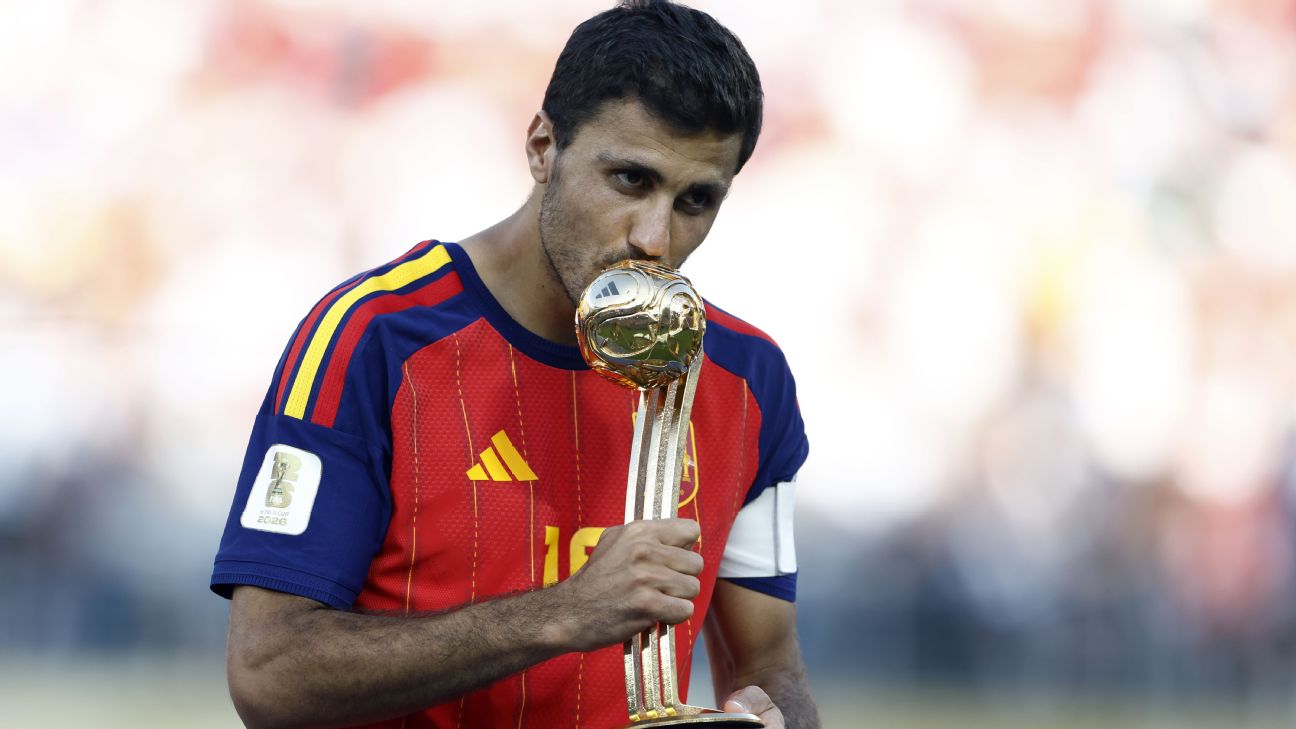
To comprehend how Barcelona pulled off this monumental transaction, one must trace the timeline back to the immediate aftermath of Spain’s 2026 World Cup triumph in North America. Having conquered every possible mountain in club football with Manchester City, including four Premier League crowns and the decisive goal in the 2023 Champions League final, Rodri entered the final twelve months of his contract at the Etihad Stadium with a quiet resolve to seek a new challenge. Manchester City officials made several overtures to extend his stay, but the Spanish international felt his English chapter had reached its natural and triumphant conclusion. Having undergone minor back surgery prior to the World Cup and subsequently playing through intense physical demands to secure international football’s ultimate prize, Rodri recognized that his next long-term contract would represent the crowning chapter of his peak professional years.
Real Madrid were the earliest and most aggressive suitors to initiate contact. Inside the boardroom at Valdebebas, discussions had been ongoing for months regarding the urgent necessity for an elite controller who could dictate tempo and orchestrate possession from deep. Real Madrid representatives initiated informal contact with Rodri’s camp, finding a receptive audience. The prospective move appeared to possess all the hallmarks of a classic Florentino Perez galactico capture, promising to bring the reigning Ballon d’Or winner back to the city of his birth. Preliminary discussions progressed positively to the point where general terms and strategic visions were exchanged between the club hierarchy and the player’s representatives.
The negotiations encountered serious friction the moment Real Madrid engaged directly with Manchester City. Despite Rodri entering the final year of his agreement, Manchester City set a firm valuation in excess of eighty million euros. City’s hierarchy felt justified in demanding a premium price tag because the player was coming off a dominant World Cup where he proved his enduring status as the preeminent defensive midfielder on the planet. Real Madrid’s financial committee balked at committing an upfront fee of that magnitude for a thirty-year-old approaching free agency, especially when paired with the substantial salary package required. Madrid calculated that City would eventually lower their demands as the transfer deadline drew nearer, leading Florentino Perez to pump the brakes on the operation while exploring alternative midfield targets such as Martin Zubimendi. That momentary pause proved to be a fatal miscalculation for the reigning European champions.
While Real Madrid hesitated, an acute crisis was unfolding in Catalonia that radically altered Barcelona’s transfer priorities. Hansi Flick’s squad had initially directed their primary financial resources toward landing Atletico Madrid forward Julian Alvarez to fill the void left by Robert Lewandowski’s departure. When Atletico Madrid flatly refused to negotiate and shut the door on any potential deal for Alvarez, Barcelona found themselves sitting on substantial unallocated capital. Almost simultaneously, star midfielder Frenkie de Jong suffered a severe knee injury that sidelined him indefinitely, creating an alarming void in the center of the pitch. Hansi Flick held emergency tactical meetings with sporting director Deco and President Joan Laporta, arguing passionately that Barcelona’s aggressive high-pressing system was unsustainable without a commanding defensive pivot who could anchor the spine and shield the backline.
Barcelona recognized that Rodri’s talks with Real Madrid had stalled and moved in with decisive speed. Joan Laporta and Deco reached out directly to the player, presenting an emotional and tactical pitch that resonated deeply with the midfielder. Beyond the lucrative four-year contract offer, Barcelona laid out a sporting project tailored specifically to his strengths, highlighting how his positional discipline would perfectly complement the creative talents of young stars like Pedri, Gavi, Dani Olmo, and Lamine Yamal. Having established an extraordinary telepathic understanding with that exact core during Spain’s victorious World Cup and European Championship campaigns, Rodri saw an opportunity to step straight into a familiar tactical ecosystem where he would be revered as both a general on the pitch and a mentor in the dressing room. The midfielder gave his explicit approval to Barcelona, informing his representatives to halt all further dialogue with the capital club.
Tactical Integration into Hansi Flick’s System
The tactical fit of Rodri within Barcelona’s tactical architecture represents a natural evolution of Hansi Flick’s philosophy. Under Flick, Barcelona have balanced aggressive counter-pressing with rapid vertical transitions, but occasionally suffered from positional instability when opponents broke through the initial line of pressure. Rodri provides the exact defensive balance and positional discipline required to let creative midfielders roam freely:
- The International Chemistry: Rodri’s immediate integration is accelerated by his pre-existing understanding with Barcelona’s Spanish core, having spent years anchoring tournaments alongside Pedri, Gavi, Dani Olmo, and central defender Pau Cubarsí.
- Positional Security for Pedri and Gavi: With Rodri operating as the singular base in midfield, Pedri is permitted to operate higher in the half-spaces, orchestrating final-third passes without constantly dropping between the center-backs to receive possession.
- Transition Suppression: Rodri ranked in the top percentiles globally for counter-press recoveries and aerial duel success rate, which drastically reduces the defensive exposure faced by full-backs advancing into the final third.
- Service to the Front Line: Rodri’s trademark diagonal switches of play provide immediate distribution to explosive wingers like Lamine Yamal and Anthony Gordon, ensuring isolated one-versus-one situations out wide.
The formal club-to-club negotiations with Manchester City moved at a rapid pace over the second week of August. Barcelona launched their initial offensive with an opening proposal worth forty-five million euros plus performance bonuses on August 7. While Manchester City rejected that first bid immediately, the opening salvo established a serious negotiating table. Barcelona followed up with an improved bid of seventy million euros, steadily closing the valuation gap as Rodri expressed his personal desire to finalize the move before the domestic season commenced. The breakthrough arrived over the weekend of August 15 and 16, when Barcelona presented a restructured package totaling €76.5 million, structured as a guaranteed sixty million euros fixed fee alongside €11.5 million in readily achievable performance-related add-ons. Manchester City sanctioned the sale, acknowledging that securing over seventy million euros for an outgoing player in the final year of his contract was a sound financial conclusion.
The immediate consequence of this agreement was felt at Wembley Stadium during the FA Community Shield. Pep Guardiola omitted Rodri entirely from the matchday squad against Arsenal to avoid any risk of injury while the administrative details were finalized, a contest that saw Manchester City suffer a 3-0 defeat in his absence. As Rodri prepares to undergo his medical evaluations and sign a contract running through June 2030, plans are already underway for a grand unveiling at the Camp Nou ahead of the Joan Gamper Trophy.
From a tactical perspective, Rodri’s arrival fundamentally transforms Hansi Flick’s Barcelona into a fearsome machine. Throughout the previous campaign, Barcelona played scintillating attacking football but proved vulnerable in defensive transitions, conceding an average of nearly two goals per game in top-tier European fixtures due to the lack of an elite ball-winner who could anticipate counter-attacks. Rodri provides world-class defensive metrics, tactical composure under pressure, and elite ball progression, allowing the fullbacks and interior midfielders to push high with complete freedom. For Real Madrid, watching the premier Spanish player of his generation join their fiercest rivals will sting for years to come. For Barcelona, pulling off this transfer represents an emphatic statement of European intent that restores the club to the absolute pinnacle of continental football.



Leave a Reply