
When a movie comes along that rattles expectations and leaves viewers talking long after the credits roll, it earns a place in cinema history, and Marty Supreme is already doing exactly that. Directed by Josh Safdie and co-written with Ronald Bronstein, Marty Supreme is a film that defies simple categorization. It is, in parts, a period sports drama, in parts a character study, and in parts an existential sprint into the heart of what it means to chase greatness. At its center stands Timothée Chalamet in a performance that critics and audiences alike are calling one of the most compelling turns of his career.

From its opening moments, Marty Supreme feels alive in a way few movies do. It is set in the 1950s, a time when table tennis was not yet a global sport, and yet this world animates itself with rhythms that feel charged and contemporary. The film follows Marty Mauser, a relentless and charismatic underdog who believes he is destined for glory. Played with an extraordinary intensity by Chalamet, Marty is not the typical sports hero. He is messy, flawed, unpolished and at times unbearably confident. Watching him is like watching a man running full speed toward a wind that keeps changing direction.
Chalamet’s embodiment of Marty Mauser is the beating heart of this film. Many seasoned critics have described his performance as career-defining and even colossal. David Ehrlich of IndieWire went so far as to call it “one of the most colossal movie performances of the 21st century,” capturing not just Marty’s ambition, but the physical and emotional tremors simmering beneath every scene.
There is an immediacy to Chalamet’s presence that holds attention in almost every frame. He is constantly in motion, gripping the camera’s gaze even in stillness. Watching him act here feels like watching a performer shape electricity itself, shifting weight and eye contact with such conviction that he seems to pull the audience directly into his point of view. This is not merely emotional range on display, but a kind of kinetic engagement that makes the character feel alive in the room with you. The table tennis sequences, filmed with a hypnotic precision and brisk choreography, only amplify this connection. Whether those rallies were performed by Chalamet himself or meticulously shot to appear that way, they crackle with visceral tension.
Underpinning all of this is the pacing and style that distinguish Safdie’s unique approach to storytelling. Known for films that blend chaos and craft in equal measure, Safdie uses Marty Supreme not as a conventional sports narrative but as a mirror held up to obsession itself. There are no training montages, no wise mentors, and no predictable arcs of redemption. Instead, the film unfolds like a series of gambits and negotiations, each scene throwing Marty into a new confrontation with his own shortcomings and his own boundless need to conquer.
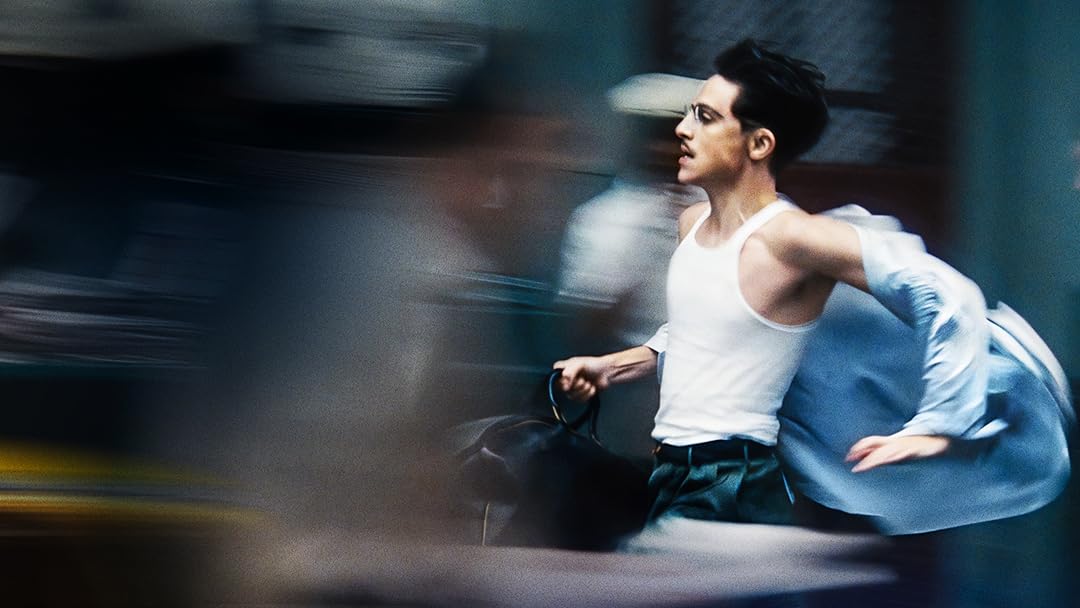
Marty’s world is as unpredictable as the sport he devotes himself to. He moves from a shoe store job in New York to tournaments overseas, from ruinous debts to unexpected romances and alliances. Along the way, he tangles with a retired movie star named Kay Stone, portrayed with vibrant complexity by Gwyneth Paltrow. Kay, a figure caught between past fame and present yearning, provides both a counterpoint and a complicated emotional foil to Marty’s relentless drive. Her presence adds texture to the story, reminding us that the grandeur of ambition is always tempered by human relationships and the cost they exact.
Critics have responded enthusiastically to the film overall. On Rotten Tomatoes, the movie holds an exceptionally high score in the mid-90s, with a consensus that celebrates Chalamet’s infectious charisma and the film’s sweeping epic energy. Reviewers praise its electric momentum, razor-sharp songwriting and the way it pushes its audiences to think about the appetite for success and the emotional soil that ambition grows from.
In terms of its impact at the box office, Marty Supreme has been a revelation. The film began its limited release with breakout numbers, delivering an extraordinary per-theater average that surpassed nearly all expectations and set records for its distributor, A24. When it expanded widely during the Christmas season, it continued to perform well, becoming one of the company’s highest-grossing films domestically and internationally. These results reflect how successfully the story and Chalamet’s performance have resonated with audiences looking for something both wildly entertaining and richly layered.
One of the fascinating aspects of Marty Supreme is its engagement with tone. It is equal parts absurd and profound, intense and humorous. It channels wild energy and emotional risk in a way that feels primal and immediate. The film thrives on contrasts, pairing moments of exhilarating play with sudden jolts of self-reflection. Watching it is like being inside a thunderstorm where clarity emerges not from calm, but from the very turbulence that seems to threaten to undo everything.
This complexity is what makes Marty Mauser such a memorable character. He is not easy to like. He is often infuriating, self-centered and seemingly blind to the consequences of his actions. And yet in his pursuit of greatness there lies something undeniably compelling and human. Through Chalamet’s performance, Marty becomes a mirror for viewers to see their own desires, failings and moments of self-deceit. He embodies not just one person’s dream, but something universal about our hunger for meaning and our fear of insignificance.
But exceptional art is never without its dissenters, and Marty Supreme has sparked its share of debate. Some viewers and commentators have argued that the narrative’s chaotic energy can feel unfocused, or that the film’s pace and stylistic choices undercut its emotional depth. Online discussions have surfaced varied reactions, with some audience members praising the performance but critiquing the writing or structure as scattershot and overwrought. These conversations are a testament to the film’s ambition, precisely because it has inspired such passionate engagement.
Despite these disagreements, the broader impression from both critics and audiences is that Marty Supreme represents an amazing moment not only for Timothée Chalamet, but for contemporary cinema. It proves that a film can be both challenging and entertaining, chaotic and deeply felt, absurd and resonant. It is a work that refuses to be pinned down, much like the man at its center.
Chalamet himself has embraced the significance of this role. In interviews he has described his work in Marty Supreme as among the best he has ever done, acknowledging the intense effort and discipline required to bring Marty to life. That declaration mirrors how audiences and critics have responded, recognizing in his work a rare merger of craft and daring that elevates the film beyond a typical sports drama into something more electric.
In the end, Marty Supreme is a movie that stays with you because it never settles for easy answers.
Timothée Chalamet’s performance anchors this journey, inviting viewers into a world that is at once wildly unpredictable and deeply reflective of the human condition. It is a spectacle of ambition and wry humor, of tension and unguarded vulnerability. Watching Marty Mauser play his game is like watching a piece of life itself unfold, in all its messy, exhilarating glory.



Leave a Reply