
The 2026 Ballon d’Or race has reached the point where the arguments can finally be made using a complete body of work rather than projections about what might happen later in the season, and the result is one of the most fascinating contests the award has produced in years. Harry Kane, Lamine Yamal, Rodri, Kylian Mbappé and Lionel Messi have emerged as the five names at the center of the discussion, each arriving there through a completely different route.
Kane produced the greatest scoring season of his career while collecting trophies with Bayern Munich and helping England to third place at the World Cup. Rodri returned from a long injury absence, collected two domestic cups with Manchester City, captained Spain to the World Cup and was officially named the best player of the tournament. Yamal delivered his best club season yet, won LaLiga and the Spanish Super Cup with Barcelona, became LaLiga Player of the Season and then became a world champion with Spain before turning 20. Mbappé finished as the leading scorer in both LaLiga and the Champions League before producing ten goals at the World Cup and breaking the competition’s all time scoring record. Messi, at 39 during the World Cup, led Inter Miami to the MLS Cup and then scored eight times as Argentina returned to the World Cup final.
There are legitimate arguments for all five, yet when the complete season is examined against the actual Ballon d’Or criteria, Harry Kane has perhaps the most convincing combination of extraordinary individual numbers, trophies, decisive performances and sustained excellence from August through July.
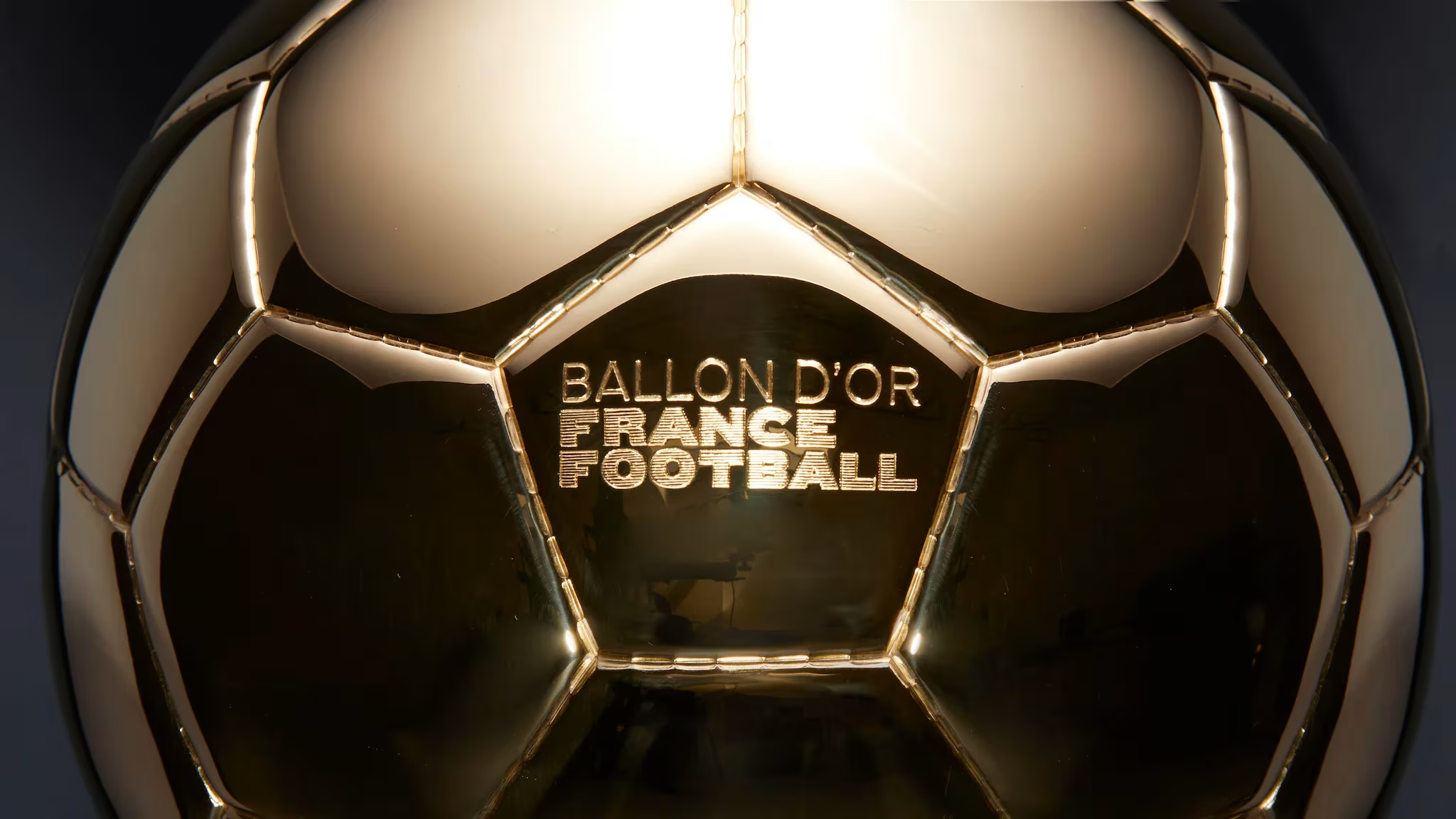
There is also an important detail that can easily be missed when discussing the 2026 award in September. France Football’s official regulations state that the reference period for the men’s Ballon d’Or runs from August 3, 2025 through July 19, 2026, specifically including the 2026 World Cup. Performances from the beginning of the 2026/27 European club season therefore fall outside the period being judged, even though they can naturally influence public conversation surrounding players several weeks before the ceremony. France Football also defines the criteria in a clear order. Individual performances, including how decisive and impressive a player was, come first. Collective performances and titles come second, followed by class and fair play. The men’s award is decided by an international jury containing one specialized journalist from each of the top 100 countries in the FIFA rankings. Every voter selects ten players from the official list of 30 nominees, with 15 points going to first place, followed by 12, 10, 8, 7, 5, 4, 3, 2 and 1. Those rules matter enormously this year because they prevent the discussion from being reduced to a simple question of who lifted the World Cup. Winning the biggest competition in football is enormously valuable, but the regulations explicitly place individual performance first, which is where Kane’s season becomes so difficult to ignore.
The 2026 ceremony itself will take place on October 26 at the London Palladium, the first time the Ballon d’Or ceremony has been held in London, as the award celebrates its 70th anniversary. The location is particularly appropriate given that England’s Stanley Matthews became the inaugural men’s winner in 1956.
Harry Kane produced a season worthy of the Ballon d’Or
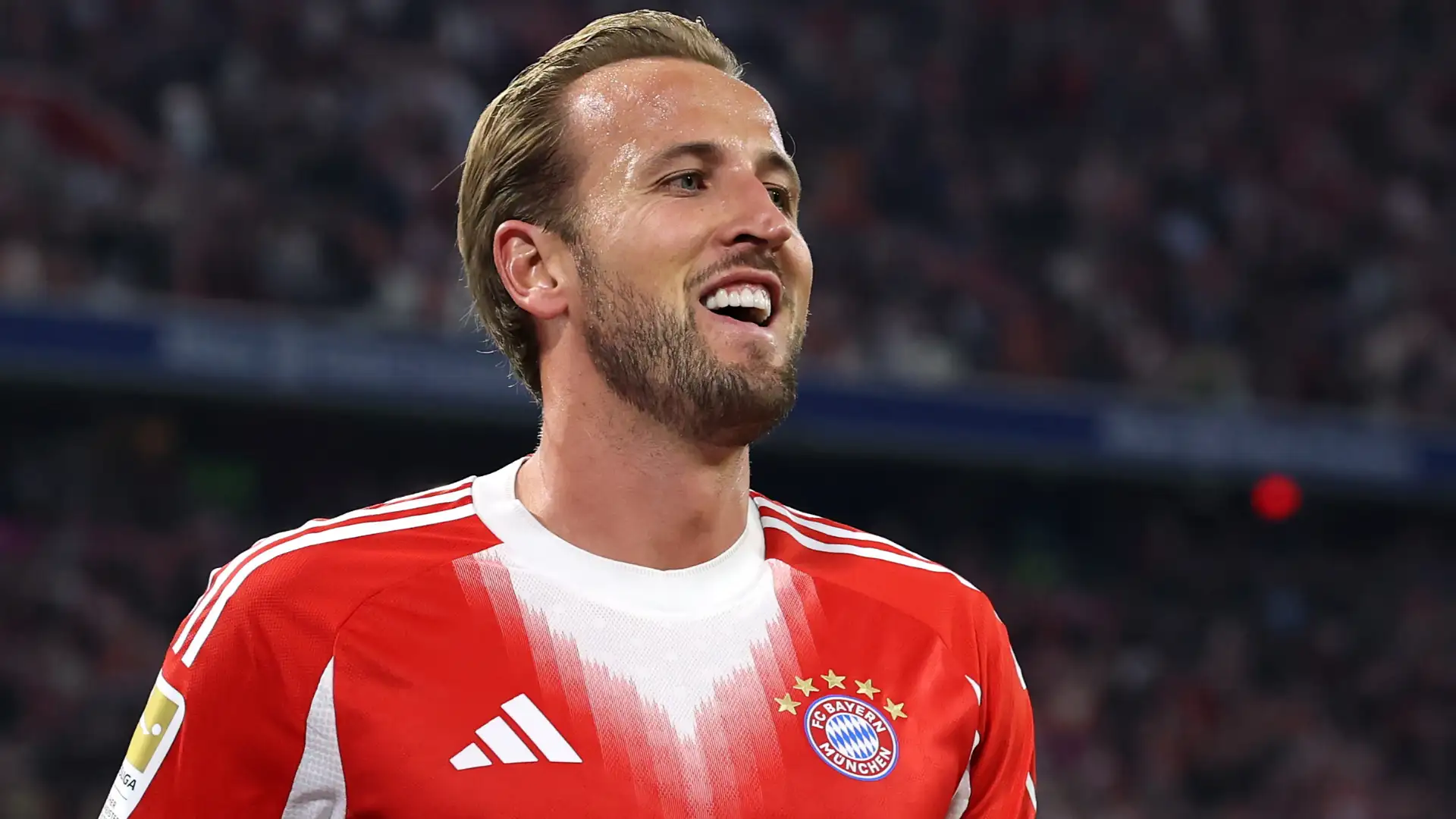
The most powerful part of Kane’s argument begins with numbers that almost look misplaced in modern elite football. He scored 61 goals in 51 competitive matches during the 2025/26 club season. Thirty six of those came in 31 Bundesliga appearances, another 14 arrived in 13 Champions League matches, he scored ten times in six DFB Cup appearances and he added another goal in the Franz Beckenbauer Supercup. He also supplied seven assists across those competitions. His 36 Bundesliga goals earned him the European Golden Shoe for the second time in his career, and he finished nine league goals ahead of Erling Haaland and eleven ahead of Mbappé in the Golden Shoe race.
Kane also became the first player in Bundesliga history to finish as the league’s leading scorer in each of his first three seasons in Germany, and his 41 direct Bundesliga goal involvements consisted of 36 goals and 5 assists. Bayern’s own announcement after the season included Kane describing 2025/26 as the best individual season of his career, an understandable assessment considering that no previous campaign had seen him score 61 competitive goals for his club.
Those goals also carried enormous competitive value. Bayern retained the Bundesliga title, and Kane’s scoring did not disappear when the season reached its biggest matches. Bayern won the Franz Beckenbauer Supercup against Stuttgart on August 16, 2025, inside the Ballon d’Or reference period, with Kane opening the scoring in an eventual 2 to 1 victory. Bayern later won the DFB Cup to complete the domestic double, and the final became one of Kane’s defining performances of the entire campaign. Stuttgart kept Bayern scoreless through the first half in Berlin, but Kane scored in the 55th, 80th and 92nd minutes to complete a second half hat trick and deliver a 3 to 0 victory. The German Football Association described Kane as the player who decided the final, while the Bundesliga’s season review records that he finished as top scorer in that competition as well. For a Ballon d’Or award whose first criterion specifically values decisive individual performances, a hat trick in a major cup final is about as direct an example as a voter could ask for. Across the season Bayern collected the Bundesliga, DFB Cup and Supercup, giving Kane three club trophies during the eligibility period.
The Champions League is the one major club trophy missing from Kane’s résumé for the season, although his performance in the competition strengthens his individual argument considerably. He scored 14 goals in 13 Champions League games, finishing only one behind Mbappé, who led the tournament with 15. Bayern reached the semifinals and became involved in an extraordinary tie against defending champions Paris Saint Germain. Kane scored a penalty in the first leg in Paris, which PSG won 5 to 4, and then scored again in stoppage time of the second leg in Munich. Bayern drew that game 1 to 1 and were eliminated 6 to 5 on aggregate. PSG eventually retained the Champions League by beating Arsenal on penalties in the final. Kane therefore cannot add European champion to his 2026 case, yet 14 Champions League goals and a semifinal appearance represent a far stronger European campaign than the phrase “did not win the Champions League” might suggest when used without context. He scored against the eventual champions in both semifinal legs and came within a single goal of the competition’s scoring title.
Then came the World Cup, which was always going to have enormous influence over the 2026 Ballon d’Or because the tournament ended on July 19, the exact final day of the award’s reference period. Kane scored six goals and contributed one assist across seven World Cup appearances, putting him behind Mbappé, Messi, Jude Bellingham and Erling Haaland in the scoring table but still among the tournament’s most productive players. England eventually finished third, its best World Cup finish since winning the competition in 1966, after losing the semifinal to Argentina and then beating France in a remarkable 6 to 4 bronze match.
This is the heart of the argument for Kane. The Ballon d’Or does not officially reward the player with the most trophies, and its published regulations place individual performance ahead of collective success. Kane was the most prolific league scorer in Europe’s major leagues, the second highest scorer in the Champions League, the leading scorer in the DFB Cup, the scorer of a hat trick in the DFB Cup final, the scorer who helped Bayern win the Supercup, and a six goal striker for a national team that reached the World Cup semifinals and finished third. His final Bayern line of 61 goals in 51 games means he averaged more than one goal per competitive appearance across an entire club season while playing league, cup and Champions League football. His 36 Bundesliga goals also came from only 31 appearances. There are candidates who possess a more prestigious single trophy and candidates whose World Cup was stronger, but nobody among this group combines Kane’s level of scoring, his volume of decisive club performances, three club trophies, deep runs in Europe and at the World Cup, and elite production across virtually every competition he entered. That is why the case for Kane extends far beyond sentiment surrounding a great striker who has waited years for individual recognition. It is rooted in a season that matches the award’s first criterion exceptionally well.
Rodri has the strongest World Cup argument
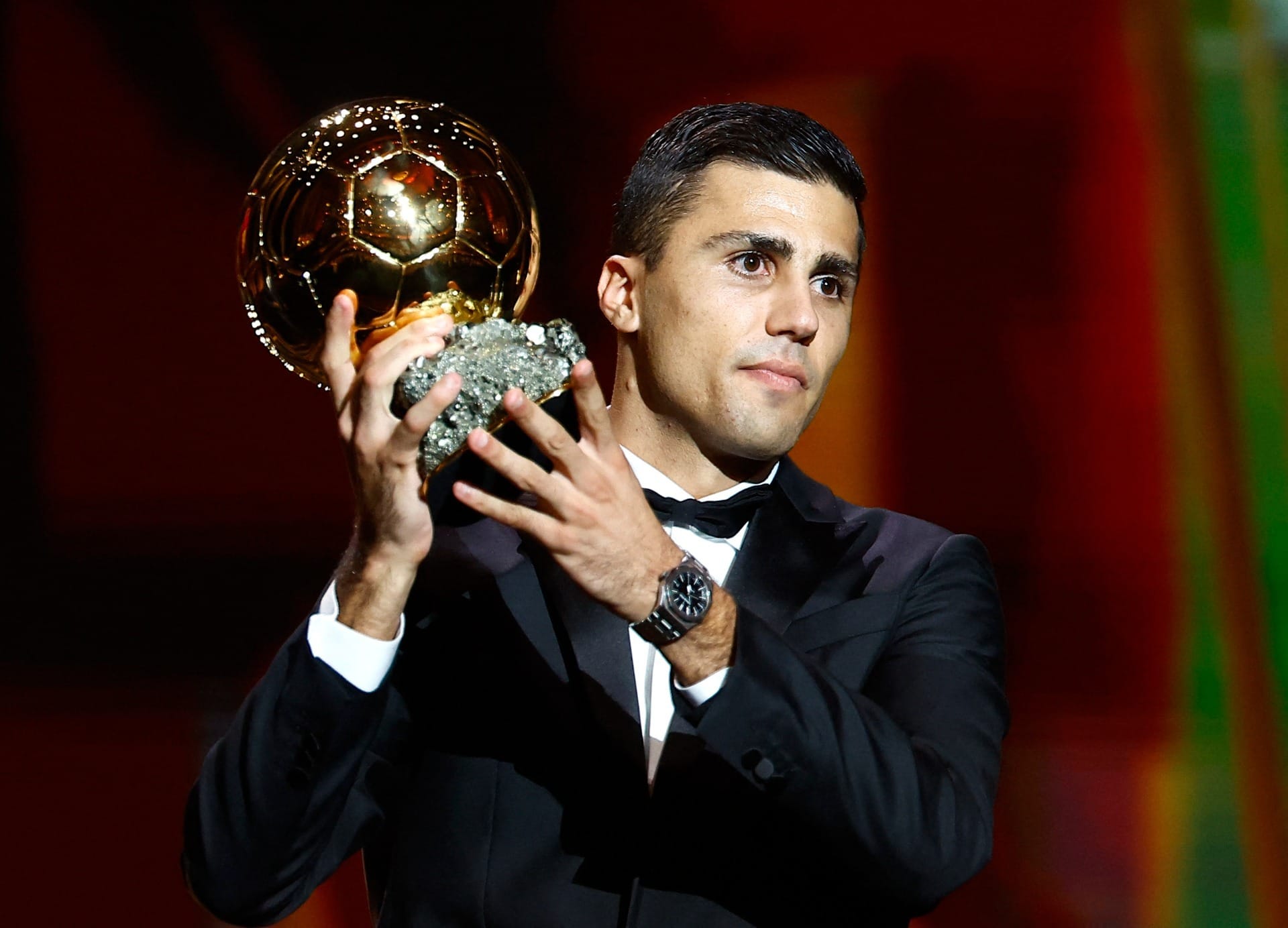
If there is one player whose case can directly challenge Kane’s, it is Rodri, largely because what happened at the World Cup could hardly have been more favorable for a Ballon d’Or campaign. Spain became world champion for the second time by defeating Argentina 1 to 0 after extra time in the final, and Rodri was awarded the FIFA World Cup Golden Ball as the tournament’s best player. FIFA highlighted his role across all eight Spanish matches, including a remarkable final in which he completed 101 of his 105 passes, won 80 percent of his duels and created two chances. Spain conceded only one goal during the entire tournament, and the final tournament statistics placed Rodri first for passes with 799. He had already won the Ballon d’Or once, in 2024, and a second victory would place him in rare company while reinforcing the value voters increasingly place on players whose influence extends far beyond goals and assists.
Rodri’s club season was more complicated because it followed the serious knee injury that had removed him from most of the previous campaign. Manchester City described the season as one shaped by his recovery, with another setback keeping him out during November and December before his performances improved in the closing months. City nevertheless ended the season with silverware, winning both the Carabao Cup and FA Cup, and its official farewell to Rodri later credited him with helping secure both trophies before he captained Spain to the World Cup and collected the tournament’s Golden Ball. Rodri subsequently left City for Barcelona, but that transfer belongs to the new season and therefore contributes nothing to his 2026 Ballon d’Or case. His candidacy is instead built around a successful return from a major injury, two English cup trophies and one exceptional international tournament that ended with the two biggest prizes available to him, the World Cup itself and the Golden Ball.
The question voters have to resolve is how much weight eight magnificent World Cup matches should carry when compared with an entire season of extraordinary production elsewhere. Rodri’s World Cup was superior to Kane’s by almost every relevant measure of tournament accomplishment. He was champion, captain and officially the tournament’s best player, while Kane’s England finished third. Rodri also has two domestic cups from his final Manchester City season. At the same time, his club campaign contained 33 appearances and was repeatedly interrupted as he worked his way back from injury, while Kane played 51 times for Bayern and scored 61 goals. Since France Football explicitly lists individual performance as the most important criterion and collective trophies as the second, there is a perfectly reasonable path to a Kane vote even after acknowledging that Rodri had the more significant summer. There is equally a coherent Rodri argument for voters who view the World Cup as the defining competitive stage of the reference period. That tension may become the central philosophical question of the 2026 vote.
Lamine Yamal became a world champion after his best Barcelona season
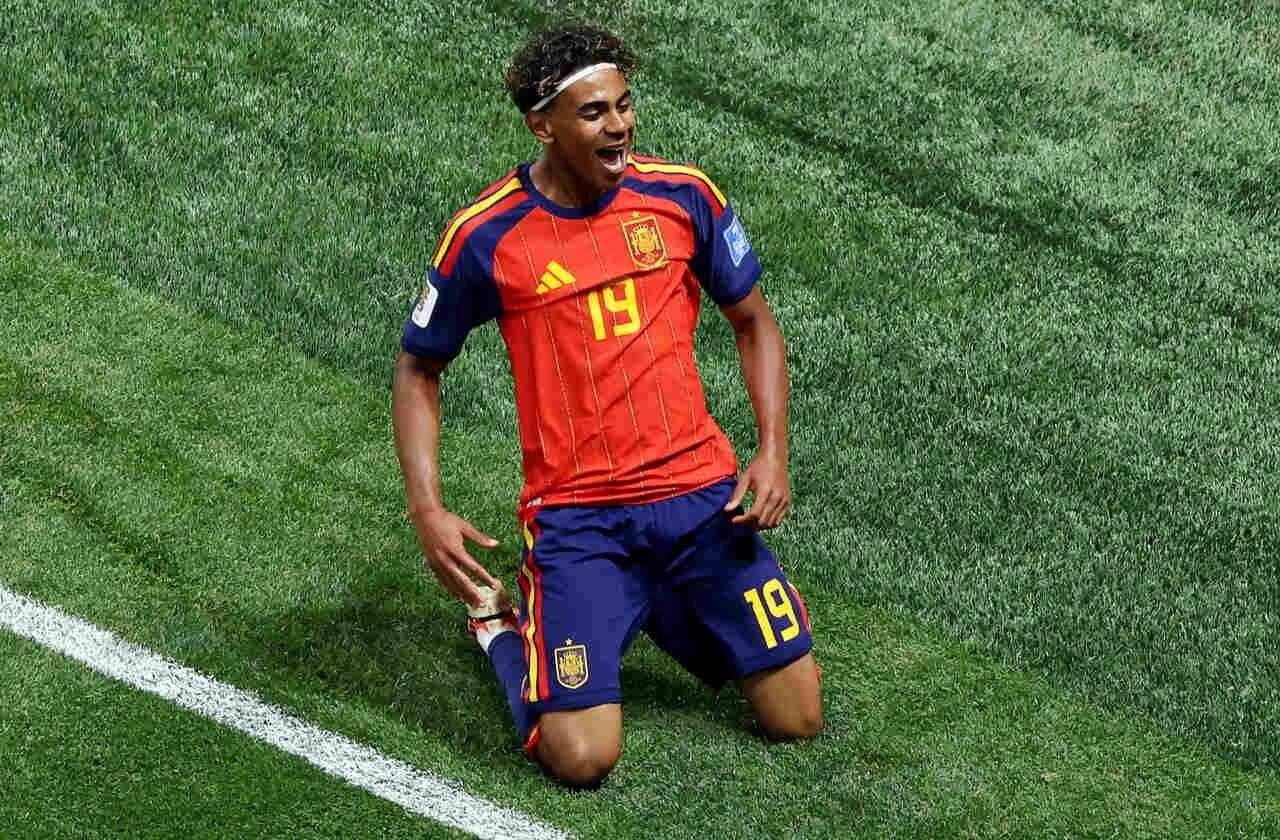
Lamine Yamal enters this vote with a remarkable amount of Ballon d’Or history already behind him despite having only turned 19 on July 13. He finished second to Ousmane Dembélé in the 2025 Ballon d’Or and won the Kopa Trophy for the second consecutive year, meaning that he began the new reference period from a position few teenagers have ever occupied. What followed was his most productive Barcelona season. Yamal had 24 goals in 45 official appearances during 2025/26, while LaLiga named him its Player of the Season after he scored 16 league goals and delivered 11 assists. Barcelona specifically noted that no player in the league registered more assists. His 16 league goals were a personal best and helped Barcelona win the championship.
Yamal was also exceptional in Europe even though Barcelona’s Champions League run ended earlier than the club wanted. He finished the competition with six goals and four assists, becoming the youngest player in Champions League history to reach ten combined goals and assists in a single season at 18 years and 275 days. His final Champions League appearance of the campaign included a goal at Atlético Madrid in the quarterfinal second leg. Barcelona won that match 2 to 1 but lost the tie 3 to 2 on aggregate. He became the youngest player to reach 30 Champions League appearances and the player with the most Champions League goals before turning 19, with 11. His 2025/26 European season therefore deserves to be viewed as a substantial part of the Ballon d’Or case even without a semifinal or final appearance.
Barcelona ended the club campaign with two trophies, LaLiga and the Spanish Super Cup. That gives Yamal a strong collective résumé before the World Cup is even considered. Then Spain won the tournament. Yamal started the World Cup as one of its most closely watched attacking players, and he scored in Spain’s 4 to 0 group stage victory over Saudi Arabia, becoming the eighth youngest goalscorer in World Cup history. His tournament, however, was far quieter statistically than those of Rodri, Mbappé, Messi or Kane. One goal, zero assists, 27 attempts and 12 shots on target for Yamal. That does not diminish the enormous achievement of becoming a world champion at 19, but it helps explain why Rodri has the stronger individual World Cup case among Spain’s Ballon d’Or candidates. Rodri won the Golden Ball while Yamal’s most impressive individual work came during Barcelona’s season.
Yamal’s current form has only made the conversation louder. By September 2026 he had already started the new LaLiga season with seven league goals across his first four scoring appearances, but those performances come after July 19 and therefore cannot formally be considered for the 2026 award. That distinction is especially important with Yamal because anyone watching football now sees a player who appears to be accelerating again, while Ballon d’Or voters are supposed to evaluate a closed period that ended with the World Cup final. Within that period his case is already extraordinary: 24 Barcelona goals, the LaLiga Player of the Season award, two club trophies, six Champions League goals, four European assists and a World Cup winners’ medal. The weaker part of his case is that Spain’s World Cup triumph produced another candidate, Rodri, who was officially selected as the tournament’s outstanding player, while Kane’s full club season produced substantially greater scoring numbers.
Kylian Mbappé had an astonishing individual year without the trophies
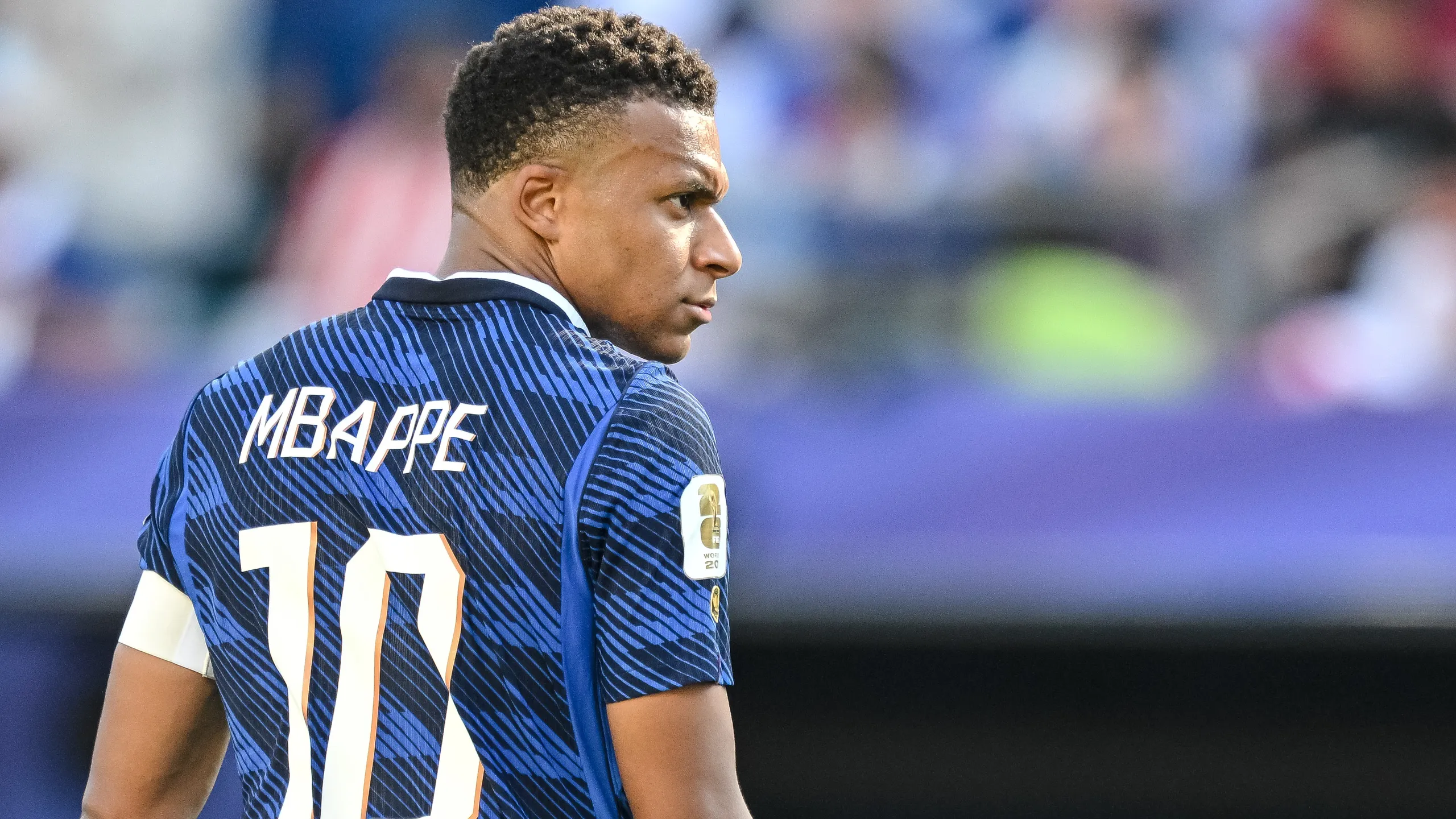
Mbappé presents perhaps the cleanest example of how individual greatness can exist alongside limited collective success. The player’s season records 42 goals in 44 matches across all competitions, including 25 goals in LaLiga and 15 in the Champions League. He won the Pichichi Trophy as Spain’s leading league scorer for the second consecutive season and finished as the Champions League’s top scorer. Real Madrid, however, did not win the major trophies that could have elevated those numbers into a more complete Ballon d’Or résumé. In Europe the club reached the quarterfinals before losing 6 to 4 on aggregate to Bayern, with Bayern winning 2 to 1 in Madrid before a 4 to 3 second leg in Munich. That result also created an interesting direct comparison with Kane, since the Bayern striker was one goal behind Mbappé in the Champions League scoring race while his team eliminated Madrid and advanced one round further.
Mbappé’s World Cup was completely different. France failed to reach a third consecutive final after losing to Spain in the semifinal and eventually finished fourth following its 6 to 4 defeat to England in the third place match, yet Mbappé produced one of the greatest individual scoring tournaments in World Cup history. He scored ten goals in eight matches and won the Golden Boot. FIFA also awarded him the Bronze Ball as the tournament’s third best player, behind Rodri and Messi. His ten goals took his career World Cup total to 22, moving him past Messi’s 21 and making him the leading scorer in World Cup history. At only 27 during the tournament, he finished the summer with records that once looked unreachable even for the greatest forwards.
If France had won the World Cup, the 2026 Ballon d’Or discussion might look completely different. Ten World Cup goals, 15 Champions League goals and 25 LaLiga goals would have been accompanied by the sport’s most important team trophy. Instead, France finished fourth and Real Madrid’s season did not supply a major title, which leaves Mbappé heavily dependent on France Football’s first criterion. His individual production is absolutely strong enough to keep him near the front of the race. His 42 goals for Madrid plus ten at the World Cup give the discussion enormous statistical weight even before his other France appearances are considered, while becoming the World Cup’s all time leading scorer creates the kind of historic achievement voters will remember. Kane’s advantage is that his own spectacular scoring was attached to three Bayern trophies, a semifinal Champions League run and England’s third place finish. Rodri’s advantage is the World Cup and Golden Ball. Yamal’s advantage is combining Barcelona trophies with a World Cup title. Mbappé has the most spectacular World Cup scoring record of the group, yet his collective résumé is the thinnest among the European based candidates discussed here.
Lionel Messi gave the Ballon d’Or one more extraordinary World Cup story
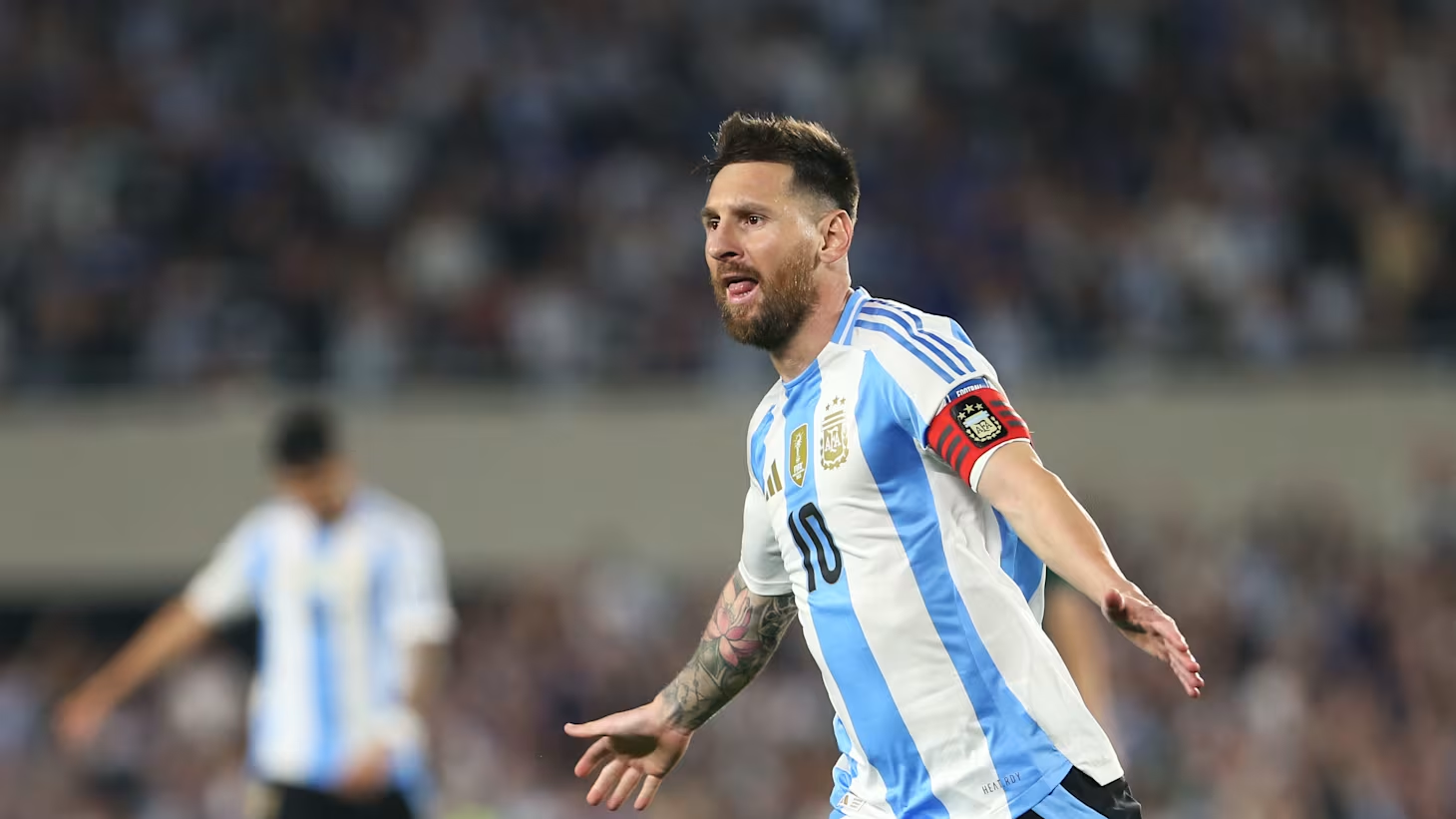
Any discussion involving Messi and this award naturally carries historical weight because he has already won the Ballon d’Or eight times, but his 2026 candidacy should be considered on what he accomplished inside the current reference period rather than the reputation accumulated over two decades. The strongest part of his club case came during Inter Miami’s 2025 MLS Cup run. Messi recorded an MLS playoff record 15 goal contributions, scoring six times and assisting nine goals, as Miami won its first MLS Cup. In the final against the Vancouver Whitecaps, Miami won 3 to 1 and Messi supplied two assists before being named MLS Cup MVP. MLS also named him the 2025 league MVP, making him the first player in league history to win that award in consecutive seasons. Some of his regular season production came before the Ballon d’Or reference window began on August 3, so the playoff run is especially useful when evaluating his candidacy because all of it occurred clearly inside the relevant period.
Then, four years after lifting the World Cup in Qatar, Messi nearly took Argentina all the way again. He scored eight goals at the 2026 World Cup and added four assists, finishing two goals behind Mbappé in the Golden Boot race and receiving the Silver Boot. He was also awarded the Silver Ball as the tournament’s second best player, behind Rodri. Argentina advanced to the final before Spain won 1 to 0 after extra time, and Messi finished the tournament with 21 career World Cup goals. He also extended his record for World Cup appearances to 34 and his record for victories to 23. A player approaching his 40th birthday reaching a second consecutive World Cup final while producing eight goals and four assists would be exceptional in any historical context, and it explains why Messi remains a serious member of the conversation rather than simply a famous name appearing on a 30 player shortlist.
The difficulty for Messi is comparing the scale of his club season with what Kane, Yamal, Mbappé and Rodri achieved in the highest level European competitions. His MLS Cup run was outstanding and his World Cup was far more productive individually than Yamal’s or Rodri’s in goals and assists, but Argentina ultimately lost the final, which left Rodri with the combination of champion and Golden Ball winner. Messi also finished behind Mbappé in both tournament goals and the all time World Cup scoring race. Against Kane, the comparison becomes one of two very different seasons: Messi has the MLS Cup, its final MVP award and a World Cup final with eight goals, while Kane has the European Golden Shoe, 61 Bayern goals, three German trophies, 14 Champions League goals and a World Cup semifinal with six goals. Messi’s achievements at 39 make his season historically unusual, although the official Ballon d’Or criteria do not award extra points for age or career legacy. Voters are asked to judge the performances within the defined period, which makes the competition around him exceptionally strong.
The World Cup changed everything, but it does not erase the club season
The World Cup creates the biggest challenge when trying to compare these five candidates because every one of them left North America with something significant. Rodri left as world champion and Golden Ball winner. Yamal left as a world champion at 19. Mbappé left with ten goals, the Golden Boot, the Bronze Ball and the all time World Cup scoring record. Messi left with eight goals, the Silver Boot, the Silver Ball and another appearance in the final. Kane left with six goals and England’s third place finish. FIFA’s official podium placed Spain first, Argentina second and England third, while its individual awards produced a Golden Ball order of Rodri, Messi and Mbappé. Those facts give Rodri an enormous advantage whenever the conversation is centered exclusively on the tournament.
Looking at the complete reference period, Kane’s greatest advantage is that his candidacy contains almost no empty section. His league season was exceptional enough to win the European Golden Shoe. His Champions League season produced 14 goals and a semifinal. His domestic cup campaign ended with ten goals in six games and a hat trick in the final. His first competitive game of the season produced a goal and a trophy in the Supercup. His Bundesliga campaign produced a championship, 36 goals and a third consecutive scoring title. His international summer produced six World Cup goals and a semifinal appearance before England finished third. When the competitions are placed side by side, the season becomes less about one spectacular statistic and more about the repeated appearance of Kane’s name near the top of every major competition he played.
The vote ultimately belongs to 100 journalists, and reasonable voters can arrive at different conclusions because these candidates excelled in such different ways. Someone who considers the World Cup the most important event of the period can build an extremely strong argument for Rodri. A voter focused on the combination of domestic excellence, youth, creativity and becoming world champion can see Yamal as the outstanding choice. Anyone who emphasizes raw attacking production at the World Cup and in the Champions League can make a serious case for Mbappé. Messi’s extraordinary MLS Cup playoffs and his eight goal march to another World Cup final give him a season that would be enough to dominate the discussion in many other years. The award’s actual framework, however, rewards the full picture, beginning with individual performance and decisive influence before moving to trophies and collective accomplishments.
With the ceremony scheduled for October 26 in London, the debate will continue until the envelope is opened at the Palladium. The result itself remains uncertain because the journalists vote independently and the points system can reward very different interpretations of the same season. What can already be established from the completed reference period is that Kane has produced a résumé worthy of standing beside the very best Ballon d’Or winning seasons of the modern era. Rodri owns the most powerful World Cup case, Yamal has assembled an astonishing season for a teenager, Mbappé has broken records that once seemed almost untouchable and Messi has produced another extraordinary international run at 39. Still, when individual brilliance, decisive moments, scoring volume, trophies, European performance and international achievement are considered together, Harry Kane has the strongest overall case for the 2026 Ballon d’Or. For a player whose career has so often been defined by extraordinary goalscoring without the collective prizes to match, 2025/26 finally provided both at once, and the numbers show just how exceptional that combination was.



Leave a Reply