
The Round of 16 delivered exactly what the Champions League always promises when the knockout stage hits its peak. Drama, goals, comebacks, heavy defeats, and a few performances that already feel like turning points in this season’s story.
Over the past two weeks, Europe’s biggest clubs faced off across eight ties, each played over two legs. Now, with the second legs wrapping up on March 17 and 18, the quarterfinal lineup is finally locked in, and the road to the final in Budapest is starting to take shape.
This round had everything. There were dominant performances that practically ended ties in the first leg, tense matches decided by fine margins, and a few surprises that reminded everyone why this competition feels different from anything else in football.
The Round of 16 featured these eight clashes:
- Galatasaray vs Liverpool
- Atalanta vs Bayern Munich
- Atlético Madrid vs Tottenham
- Newcastle United vs Barcelona
- Bayer Leverkusen vs Arsenal
- Bodø/Glimt vs Sporting CP
- Paris Saint-Germain vs Chelsea
- Real Madrid vs Manchester City
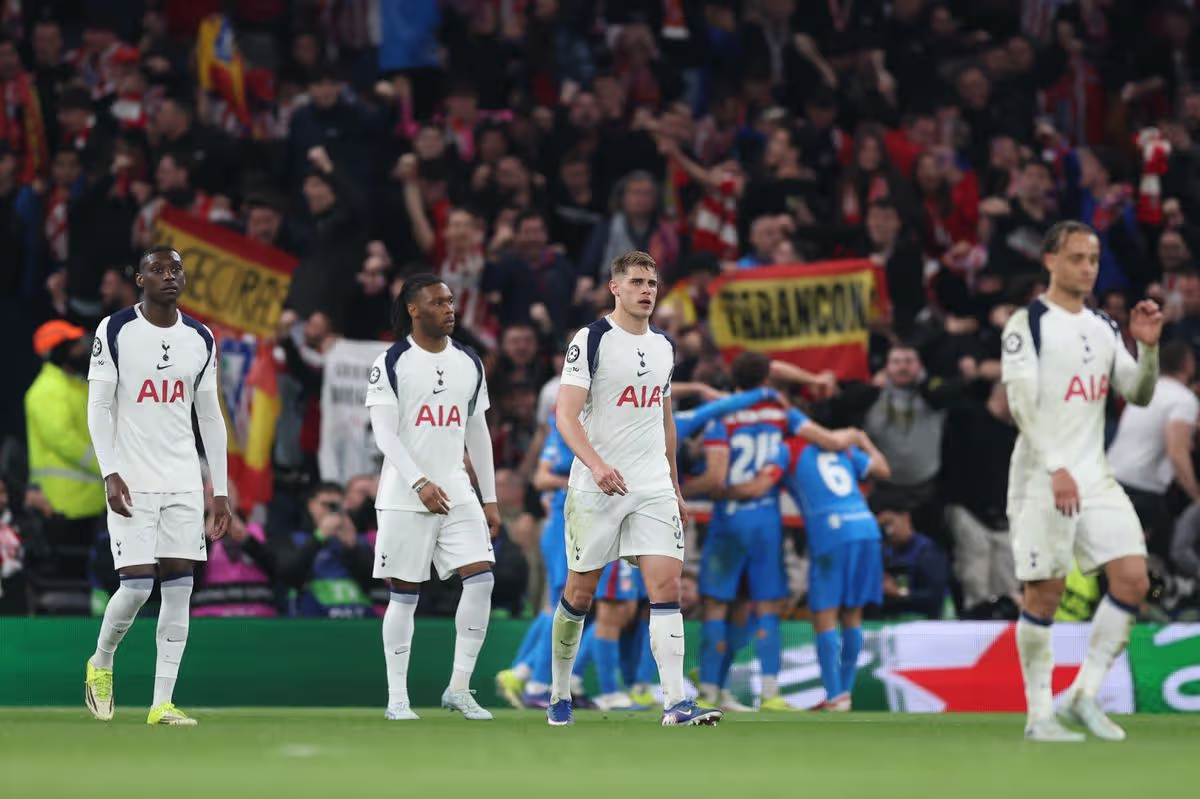
The most shocking and one-sided result of the entire round came in Madrid, where Atlético beat Tottenham 5–2 in the first leg, and the game was practically over within the opening minutes. Atlético scored four goals in just over twenty minutes, overwhelming Spurs with intensity, pressing, and clinical finishing.
Marcos Llorente opened the scoring early, followed by goals from Antoine Griezmann, Julián Álvarez, and Robin Le Normand. By the time Tottenham tried to respond, the damage was already done.
Spurs managed to score twice, but even that felt irrelevant considering the scale of the collapse. Atlético walked into the second leg with full control of the tie, and there was little doubt about who would advance.
In the return match, Tottenham actually responded with a much stronger performance and managed to win on the night, showing a completely different attitude compared to the collapse in Madrid. Playing at home, they came out with intensity, pressing higher and attacking with urgency from the start. They were far more aggressive in duels and transitions, creating chances and putting pressure on Atlético Madrid’s defense.
Despite Tottenham winning the second leg, the damage from the first match was simply too big to overcome. Atlético Madrid still advanced on aggregate after their dominant 5–2 victory in the first leg had already put the tie almost out of reach.
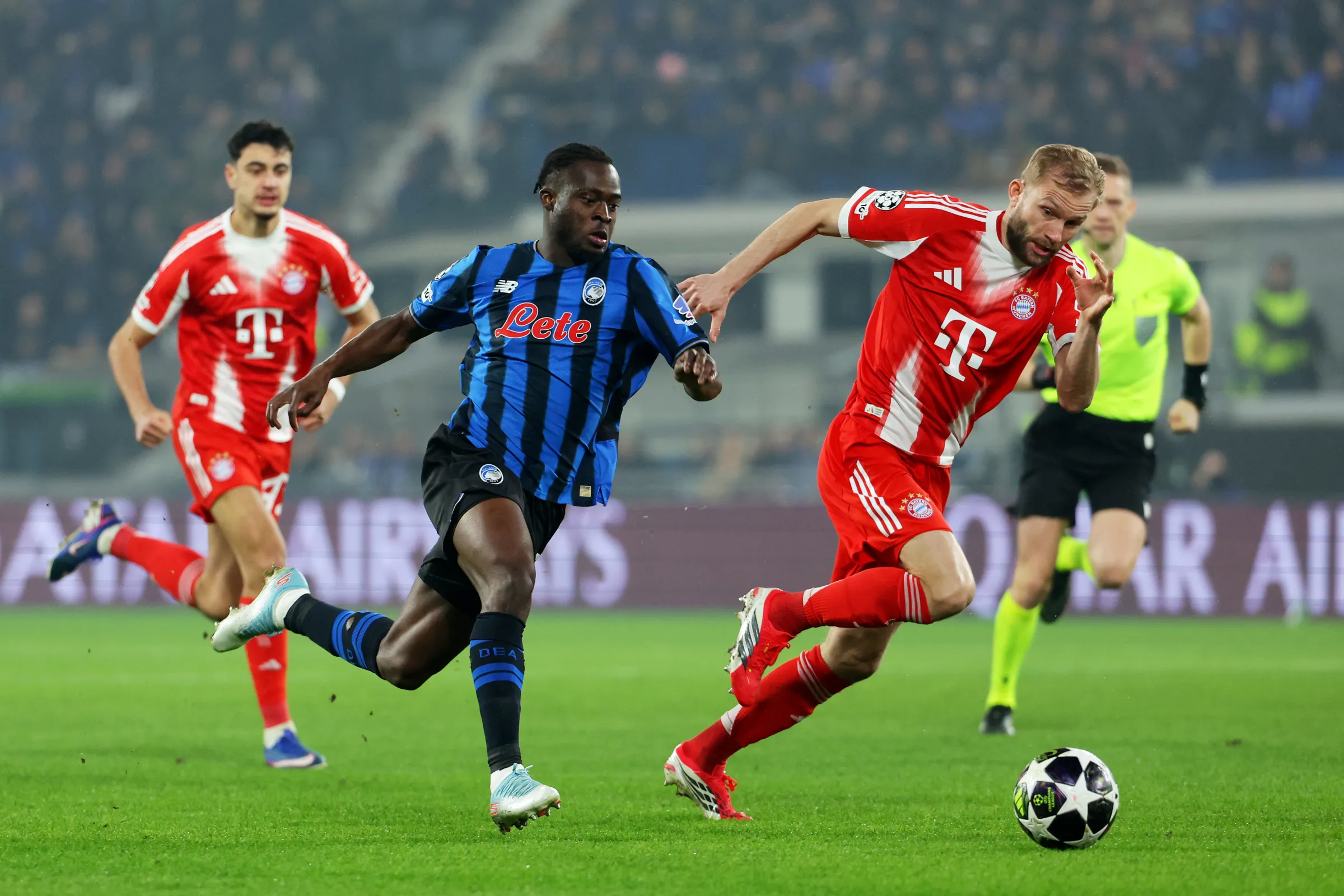
If Atlético’s performance was brutal, Bayern Munich’s was just as ruthless, maybe even more. They beat Atalanta 6–1 in the first leg, effectively ending the tie in a single night.
Bayern dominated every aspect of the game. Their attack was relentless, creating chances almost at will, while Atalanta struggled to cope with the pace and movement. This kind of result changes how the rest of Europe sees you. Bayern announced themselves as one of the strongest contenders for the title.
The second leg followed the same script, even if with slightly less chaos. Bayern Munich remained in control and confirmed their superiority over both matches.
Atalanta tried to show pride in front of their crowd and avoid another heavy defeat, but the gap in quality was still evident. Bayern continued to create chances and stayed dangerous throughout the match.
With a dominant 10–2 aggregate score, Bayern Munich closed out one of the most one-sided ties of the round, reinforcing their status as one of the strongest teams left in the competition.
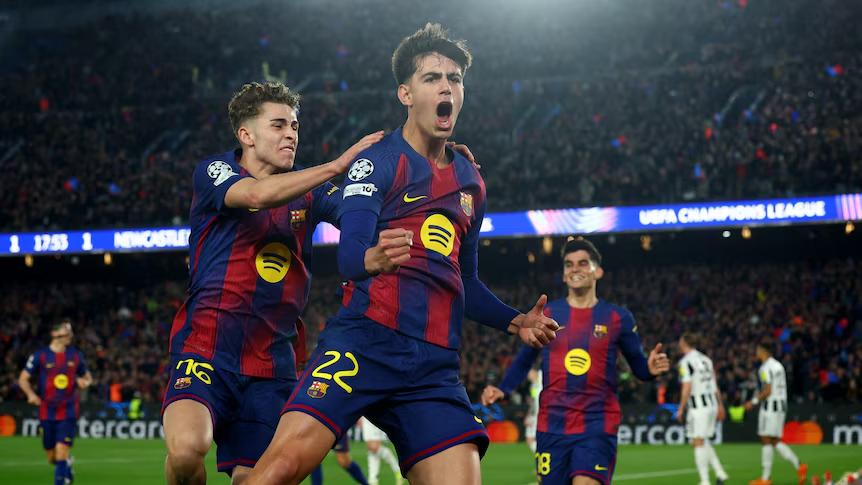
One of the more balanced ties came between Newcastle United and Barcelona.
The first leg ended 1–1, and this was not a dominant performance from either side. Going into the second leg, this tie felt wide open, and that uncertainty made it one of the most interesting matchups of the round.
In the return leg, Barcelona completely took over the tie. Playing at home, they delivered a dominant performance and overwhelmed Newcastle from start to finish. They controlled possession, dictated the tempo, and created a constant stream of chances. Newcastle, who had been competitive in the first leg, struggled to cope with the intensity and technical quality on display.
The match turned into a clear win, with Barcelona scoring multiple goals and removing any doubt about qualification. The 8–3 aggregate score highlighted just how decisive the second leg was.
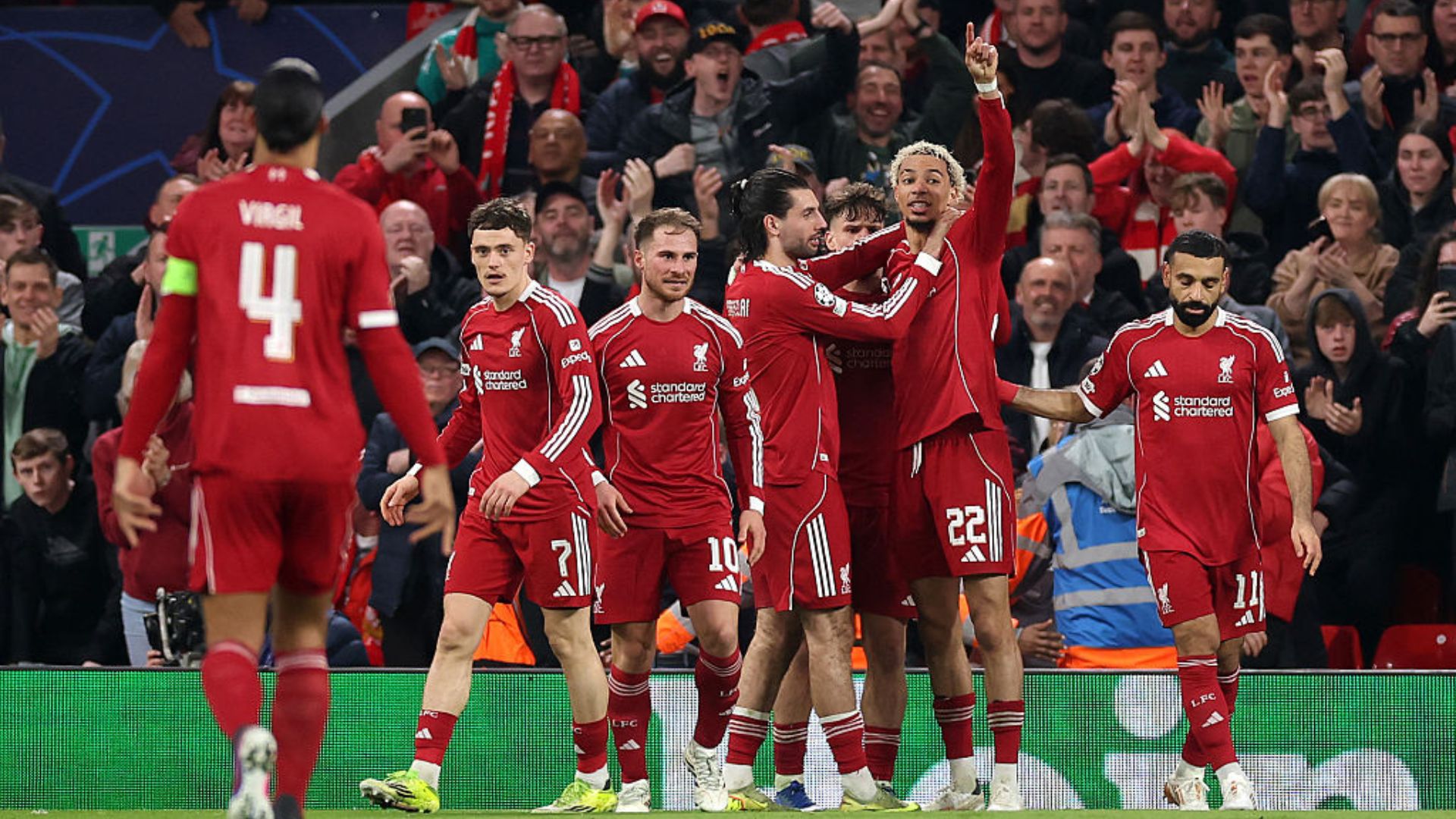
Galatasaray managed to take a 1–0 lead against Liverpool in the first leg, scoring early and then holding on under pressure. Liverpool struggled to find rhythm in that match and were fortunate not to concede more. It was the kind of result that creates tension heading into the second leg, especially when one team is expected to dominate but fails to do so. Galatasaray’s performance showed discipline and organization, while Liverpool had to rely on their experience and quality to try to turn things around in the return leg.
In the second leg, Liverpool delivered the response expected from a team with their European pedigree. Playing at Anfield, they took control early and applied constant pressure. The intensity and attacking volume eventually broke through Galatasaray’s defensive structure. Liverpool scored multiple goals and flipped the tie comfortably.
With a 4–1 aggregate victory, they completed the comeback and advanced to the quarterfinals, turning a difficult first leg into a controlled and convincing qualification.
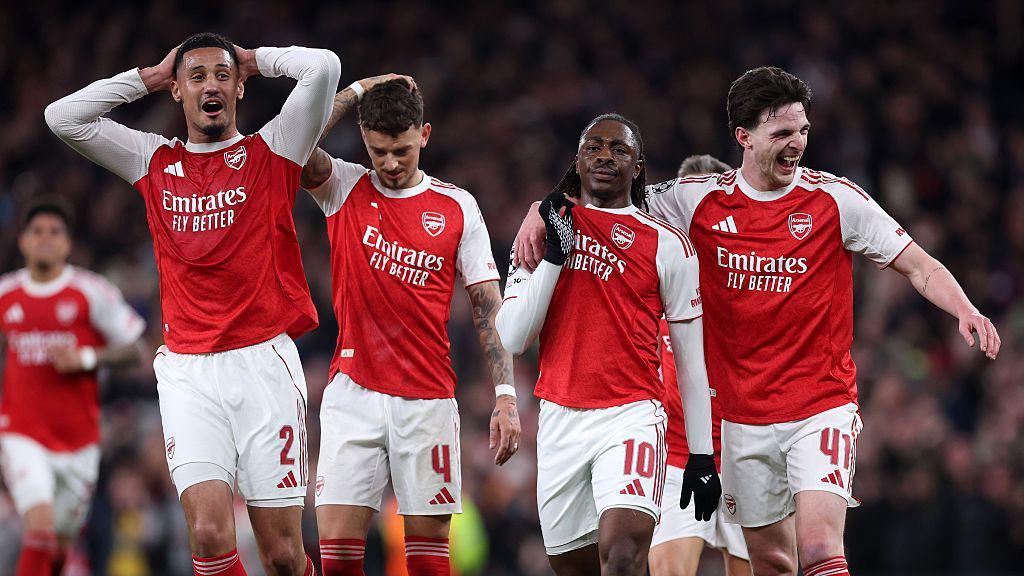
Arsenal’s trip to face Bayer Leverkusen ended in a 1–1 draw, another tie that stayed completely open after the first leg.This was a more tactical match compared to the others. Both teams showed respect for each other, and neither wanted to take unnecessary risks.
Arsenal’s ability to stay composed away from home kept them in a strong position, but Leverkusen proved they were more than capable of competing at this level.
The second leg stayed true to the nature of the first match, with a tight and controlled game. Arsenal, however, were more clinical when it mattered most. They managed the tempo well and took advantage of key moments, while Leverkusen struggled to convert their opportunities.
The 3–1 aggregate score reflected a competitive tie, but one where Arsenal ultimately showed more composure and efficiency to secure their place in the next round.
Paris Saint-Germain confirmed their dominance over Chelsea with another strong performance, completing an overwhelming 8–2 aggregate victory. Their attacking quality proved too much across both legs.
Real Madrid once again showed their Champions League pedigree, controlling the tie against Manchester City and advancing with a 5–1 aggregate score. Their first leg advantage gave them full control heading into the return match.
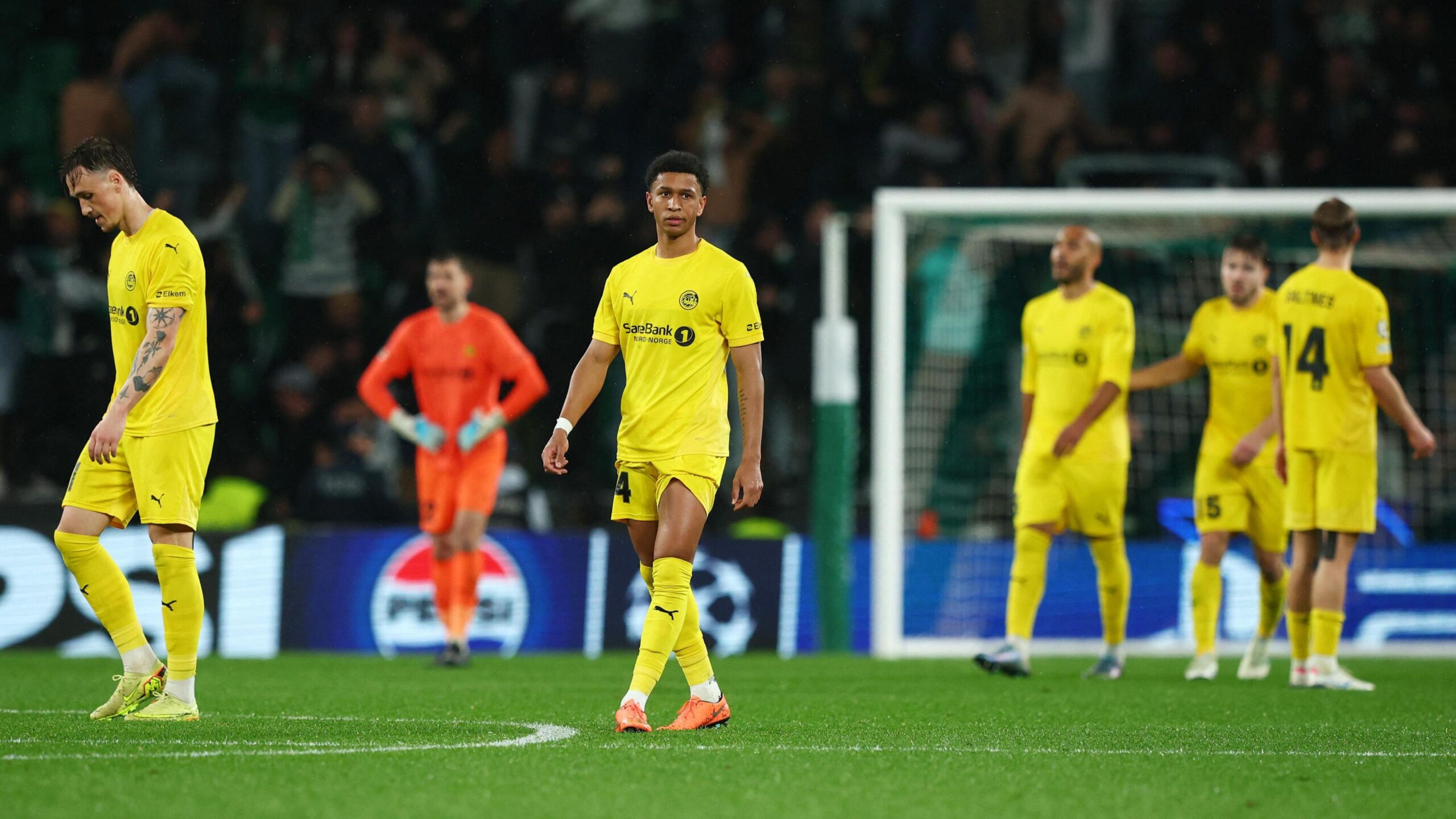
Sporting CP completed a comeback after losing the first leg, overturning the deficit against Bodø/Glimt and advancing 5–3 on aggregate, one of the most interesting turnarounds of the round.
The Teams Qualified for the Quarterfinals
- Bayern Munich
- Atlético Madrid
- Barcelona
- Arsenal
- Paris Saint-Germain
- Real Madrid
- Sporting CP
- Liverpool
The quarterfinals will take place in April, with matches scheduled for April 7 and 8, followed by the second legs on April 14 and 15.



Leave a Reply