

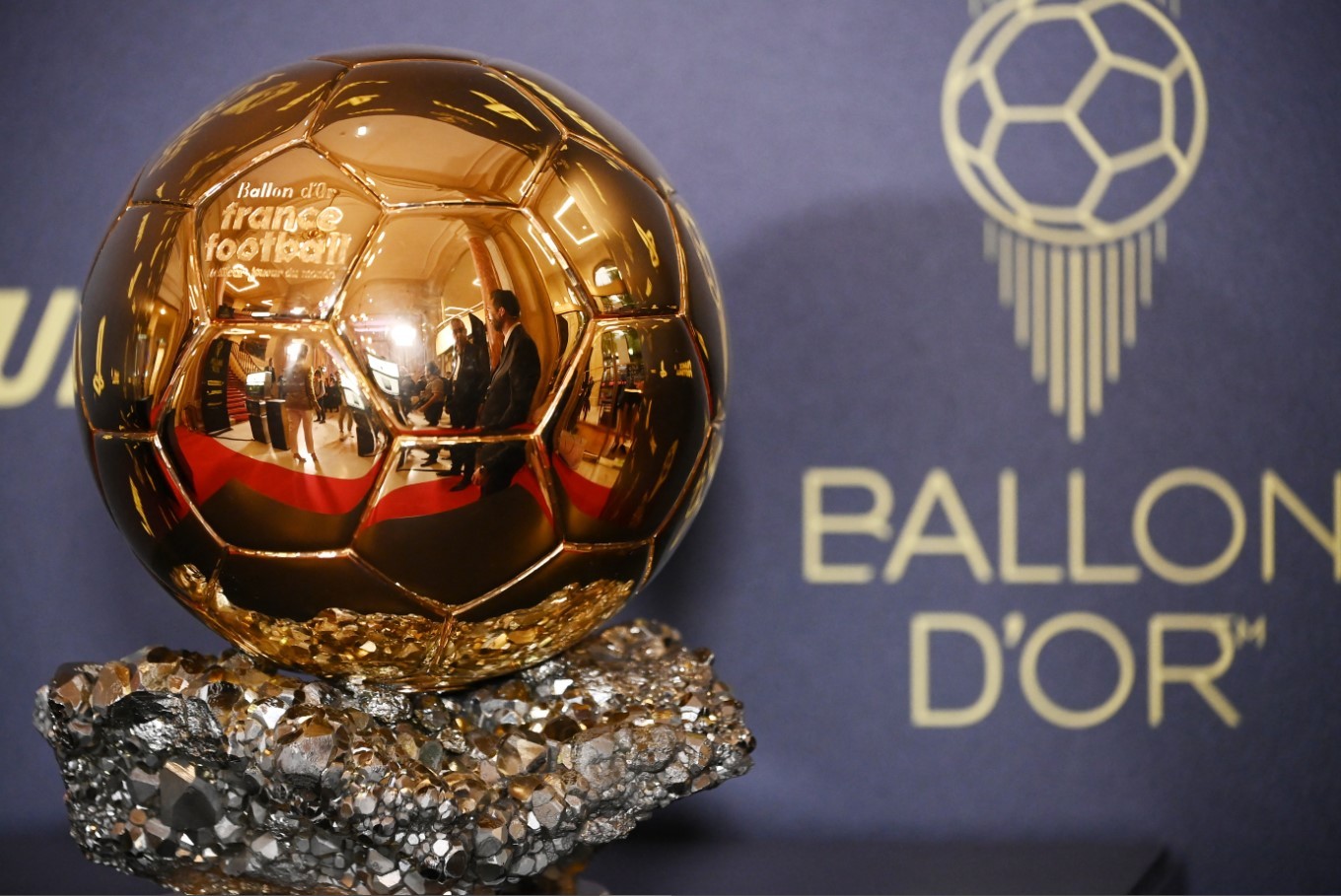
Harry Kane won the 2026 Ballon d’Or on Monday, October 26, receiving football’s most prestigious individual award after an extraordinary season with Bayern Munich and England. The 33-year-old finished ahead of Kylian Mbappé and Lamine Yamal, bringing an end to England’s 25-year wait for a men’s winner and adding the biggest individual honour of his career to an already remarkable collection of scoring achievements. Presented with the trophy by Brazilian great Ronaldo at the London Palladium, Kane enjoyed a particularly personal celebration in the city where his footballing journey began, surrounded by players whose performances had made this year’s competition exceptionally strong.
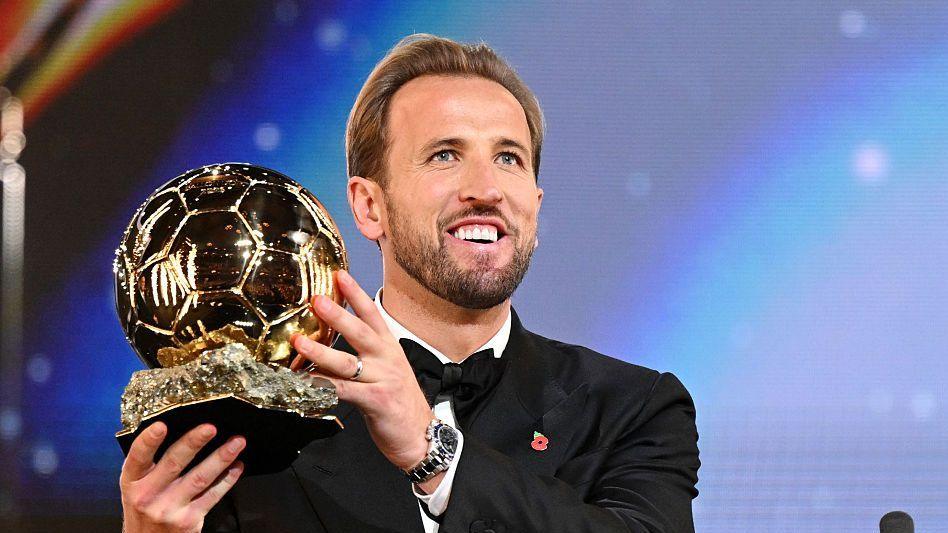
The scale of Kane’s achievement becomes clear through the numbers behind his season. England Football recorded 73 goals in 65 appearances for club and country, comprising 61 for Bayern and another 12 for England. His contributions helped Bayern win the Bundesliga, DFB-Pokal and Franz Beckenbauer Supercup, while England finished third at the World Cup, their best result in the competition since lifting the trophy in 1966. Those accomplishments gave his candidacy considerable substance across domestic and international football, with a sustained level of production that carried him through an unusually demanding campaign. For a striker who has spent so much of his career being measured against scoring records, this was the season that brought the widest recognition.
Kane’s Bundesliga campaign provided the foundation, with 36 goals in 31 appearances establishing him as the competition’s leading scorer for a third consecutive season. The Ballon d’Or’s official account of his victory also credited him with a second European Golden Shoe, underlining how his domestic output compared with the strongest scorers elsewhere in Europe. Across all competitions for Bayern, he added seven assists to his 61 goals, averaging a goal every 66 minutes and a goal or assist every 59 minutes. Those figures demonstrate the consistency that separated his season from an occasional run of spectacular performances, since his influence remained substantial across league matches, cup fixtures and European nights.
His performance in the German Cup final supplied one of the clearest examples of that influence. Kane scored all three goals in Bayern’s 3–0 victory over Stuttgart, becoming only the fourth player to register a hat-trick in a German Cup final. His three goals came consecutively in the same half, a distinction that made the performance unique among those previous final hat-tricks. He finished the competition with ten goals, while his Champions League campaign produced another 14. In Europe, he scored in six consecutive knockout matches, matching a sequence achieved by Cristiano Ronaldo, and helped Bayern reach the semi-finals. His season therefore contained decisive contributions in the fixtures that carried the greatest pressure.
The international part of Kane’s campaign strengthened that record further. He scored six times at the 2026 World Cup, with the Ballon d’Or’s official striker award profile identifying three of those goals as match winners. During the tournament, he also moved beyond Gary Lineker to become England’s leading scorer in World Cup history. Those achievements gave his summer significance beyond the national team’s finishing position, demonstrating how central he remained to England’s attacking play.
The final ranking reflected the quality of the opposition Kane had overcome. Mbappé finished second, followed by Yamal in third, Rodri in fourth and Lionel Messi in fifth. Khvicha Kvaratskhelia placed sixth, Ousmane Dembélé seventh and Erling Haaland eighth, with Kane’s Bayern teammate Michael Olise ninth and Fabián Ruiz completing the top ten. The result brought together several generations of outstanding players, from Messi to the teenage Yamal, while rewarding Kane at a stage of his career when his performances continue to demand attention. His position above such a varied group of attacking and midfield talents made the victory an especially significant endorsement of his season.
For English football, the victory restored a connection with an award that had remained beyond its players’ reach since Michael Owen’s success in 2001. Kane became the fifth Englishman to win, joining Stanley Matthews, Bobby Charlton, Kevin Keegan and Owen, with Keegan having received the trophy twice. England manager Thomas Tuchel congratulated his captain and emphasised the significance of his leadership alongside his performances. The setting added another historical link, since the ceremony’s move to London paid tribute to Matthews, the inaugural winner in 1956. Seventy years after that first award, an England captain was collecting the trophy in front of a London audience.
The result carried comparable importance in Germany, where the Bundesliga had waited three decades for another winner. Kane became the first player from the league to receive the Ballon d’Or since Borussia Dortmund’s Matthias Sammer in 1996, and the seventh different player to win while representing a Bundesliga club. His predecessors include Gerd Müller, Franz Beckenbauer, Allan Simonsen, Keegan, Karl-Heinz Rummenigge and Sammer. That history places Kane’s achievement within a much larger footballing tradition, while Olise’s top-ten finish offered further recognition of Bayern’s attacking quality.
Kane’s acceptance speech reflected that sense of shared achievement. He thanked his Bayern teammates for pushing him in training and helping him improve, recognised Vincent Kompany, and acknowledged the contribution of England’s players, staff and supporters. His remarks about the national team recalled the bond developed during the World Cup, including the time the squad spent together away from matches. He also credited Tuchel’s leadership and the standards demanded within the England setup. Although the trophy carried his name, his account of the season repeatedly returned to the people around him, offering a personal explanation of how he had maintained such an exceptional level across club and international football.
Tottenham received a particularly meaningful acknowledgement, with Kane making clear that his development there had made the evening possible. The club’s coverage of his speech recorded his thanks for the guidance he received after arriving as a child, along with his recognition of the successes and disappointments that shaped him. He also named several figures involved in his development, including Bradley Allen, Chris Ramsey, John McDermott, Alex Inglethorpe, Tim Sherwood and Ryan Mason. Tottenham described him as their first academy graduate to win the award, a distinction that ensured the celebration extended well beyond his current club. His gratitude gave the occasion an emotional connection to the years before Bayern and international records.
Kane also left the ceremony with the men’s striker award, referred to in Bayern’s coverage as the Gerd Müller Trophy, recognising his exceptional scoring output. Receiving both awards on the same evening gave his season recognition through two different measures: his scoring production and his overall standing in the main vote. It was another connection with Müller, whose name remains inseparable from Bayern’s history, and a fitting additional prize for a campaign in which Kane repeatedly supplied the goals that turned strong team performances into victories.
He deserves it.